


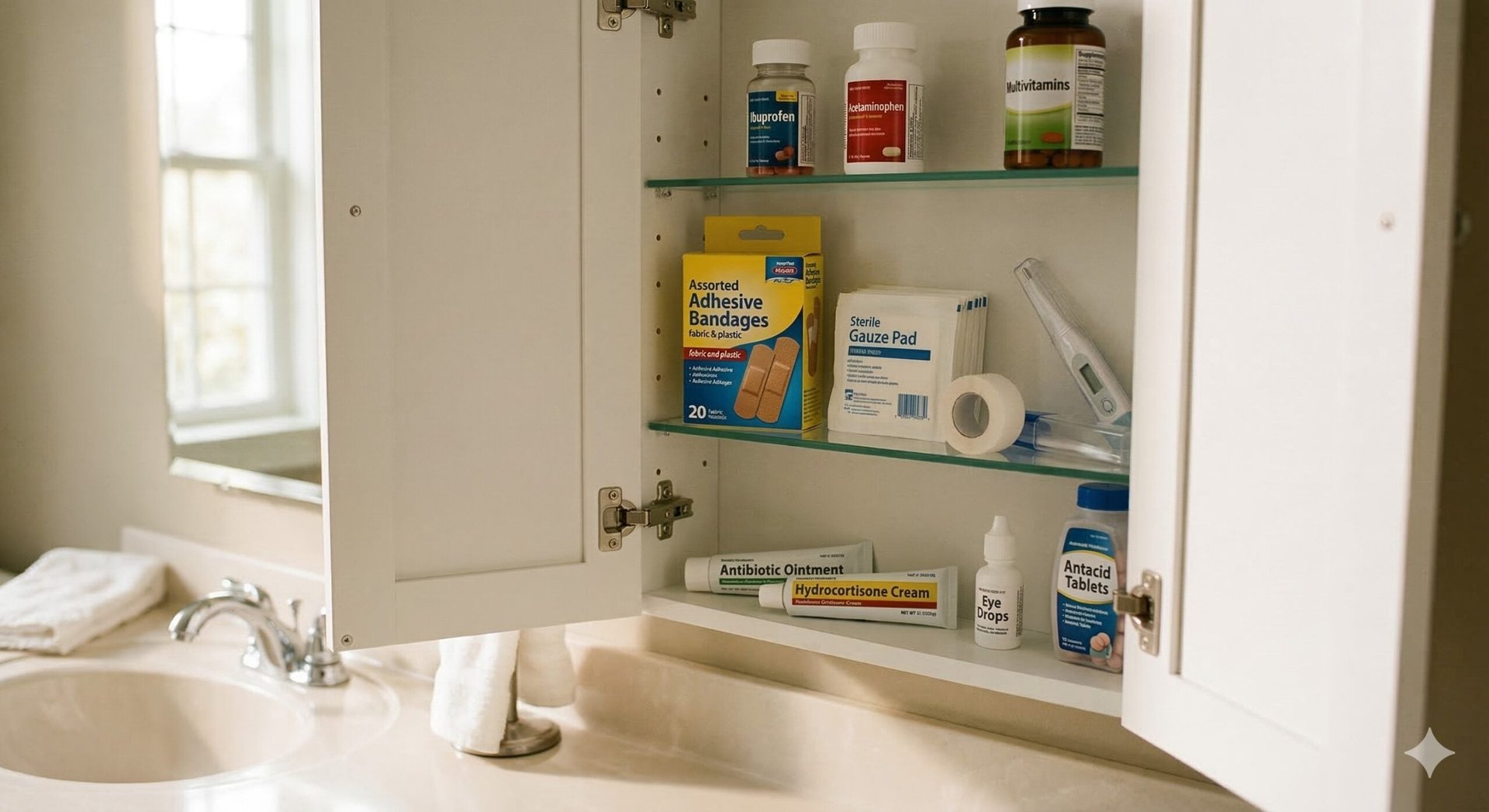

You wake up at 2 a.m. with a throbbing headache, or you slice your finger chopping onions for dinner. You rush to the bathroom, open the cabinet, and find nothing but expired cough syrup from three years ago and a single, crusty bandage.
We’ve all been there. But scrambling for supplies when you’re sick or bleeding isn’t just stressful; it often leads to late-night pharmacy runs where you end up overpaying for basic items out of sheer desperation.
You don’t need to turn your bathroom into a hospital supply room, but a little preparation goes a long way. Before you end up paying convenience store markups for basic necessities, take 10 minutes to audit your supplies.
The 10 essentials you actually need
Here’s the practical, no-nonsense list of what you should keep on hand.
- Pain relievers and fever reducers: You’ll want acetaminophen (Tylenol) and a nonsteroidal anti-inflammatory drug (NSAID) like ibuprofen (Advil). They do different things. Acetaminophen is great for fevers, while ibuprofen tackles inflammation and muscle aches.
- Bandages in various sizes: Forget the flimsy ones that fall off in the shower. Get a multipack of high-quality adhesive bandages, plus a few larger gauze pads and medical tape for bigger scrapes.
- Antibiotic ointment: A basic tube of bacitracin or a triple-antibiotic ointment helps prevent infection in minor cuts and burns. It also keeps the wound moist, which can help speed up healing.
- A reliable digital thermometer: Guessing your temperature by feeling your forehead doesn’t work. Keep a good digital thermometer and a backup battery for it.
- Antihistamines: Even if you don’t have chronic allergies, sudden hives from a new food or a severe reaction to a bug bite can happen. Keep a basic antihistamine like diphenhydramine (Benadryl) on hand.
- Hydrocortisone cream: When a mystery rash appears or mosquitoes feast on your ankles, a 1% hydrocortisone cream will stop the itching so you don’t scratch yourself raw.
- Quality tweezers: Stop using dull bathroom tweezers for splinters or stingers. Buy a sharp, angled pair dedicated specifically to first aid and sanitize them before and after every use.
- Antacids or acid reducers: Heartburn rarely hits at a convenient time. Keep a bottle of basic chewable antacids or an acid reducer in the cabinet for post-dinner emergencies.
- Cold and cough medications: You’ll want a decongestant for stuffy noses and a cough suppressant to help you sleep. Buy generic store brands; they have the exact same active ingredients as the pricey name brands. If you’re looking for ways to cut costs on heavier medications, knowing how to save money on prescriptions can keep hundreds in your wallet each year.
- A basic first-aid manual: When panic sets in, your brain gets foggy. A small, physical booklet from the Red Cross detailing how to handle burns, sprains, or choking is invaluable when the Wi-Fi is down or you can’t think straight.
Let your tax-advantaged accounts foot the bill
If you have a flexible spending account (FSA) or a health savings account (HSA), don’t pay for these supplies out of your regular checking account.
Thanks to federal rule changes a few years back, you can use your tax-advantaged HSA or FSA dollars to buy almost everything on this list. Over-the-counter pain relievers, allergy meds, antacids, bandages, and thermometers are all eligible expenses.
You no longer need a doctor’s prescription to get the most benefit from your HSA when stocking up on basic medicine cabinet staples.
If you have an FSA, this is a great way to burn through any leftover funds at the end of the year so you don’t lose that money. Just use your account’s debit card at the pharmacy checkout or save your receipts for reimbursement.
How to manage your stash
Don’t buy the giant warehouse club sizes of these items unless you have a large family. Medications lose their potency over time. Buying a 500-count bottle of ibuprofen just to throw half of it away when it expires isn’t saving you money.
Check your cabinet once a year, throw out the expired items, and restock the basics. It’s a cheap insurance policy for your peace of mind.
Read the full article here