


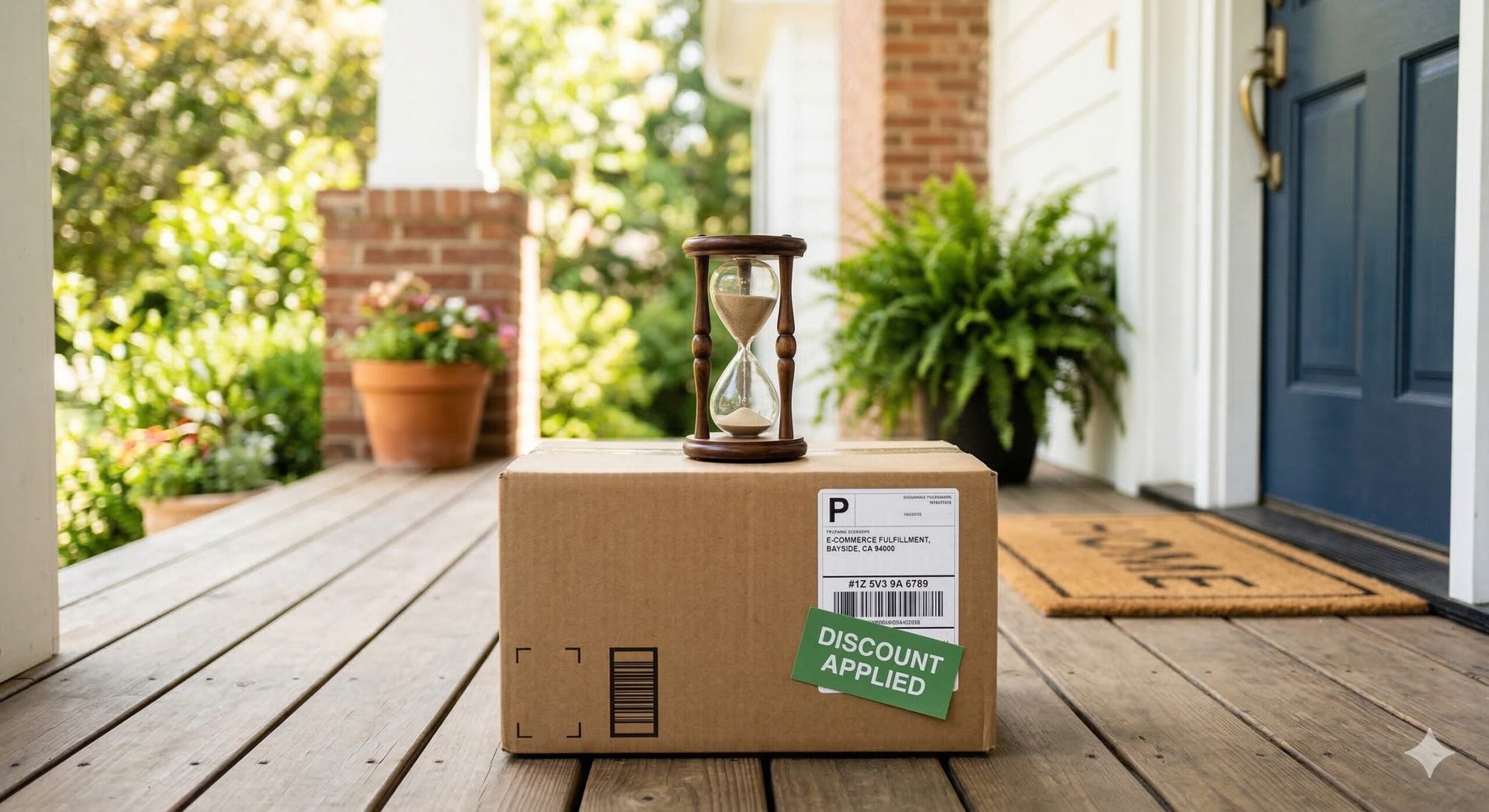

Remember when Amazon Prime trained us to expect everything from a new flat-screen to a tube of toothpaste delivered to our doorstep in 48 hours or less? Well, the era of instant retail gratification is quietly coming to an end.
According to a recent report from The Wall Street Journal, the ever-growing e-commerce industry is actively weaning us off lightning-fast deliveries. And surprisingly, most of us aren’t complaining.
For years, online shopping giants gladly ate the massive costs of expedited shipping to win your loyalty. But the math just doesn’t work anymore. Shipping costs are skyrocketing, and companies are finding creative ways to make us slow down.
Here’s why your packages are taking longer to arrive, and why it’s actually a smart shift for your wallet.
1. The delivery giants are jacking up their rates
FedEx and UPS are a lot of things, but they aren’t cheap. Since 2020, these major carriers have raised their base rates by roughly 5% to 7% every single year.
They’ve also piled on extra penalties for things like residential deliveries, fuel surcharges, and oddly shaped boxes.
FedEx has even signaled it would rather focus on shipping high-profit items — like expensive smart electronics — instead of hauling low-margin T-shirts across the country. Because carriers are squeezing the merchants, those merchants are moving to slower, cheaper alternatives to keep from passing massive price hikes on to you.
2. Patience literally pays off
Retailers are bribing us to wait, and it’s working. Amazon Prime now routinely offers customers discounts — sometimes around 7% for certain members — if they voluntarily choose a later delivery date.
Gap offers a “no rush” option that can take up to nine business days, positioning it as their free or cheapest tier.
A 2024 McKinsey survey revealed that when it comes to e-commerce, delivery cost is now the consumer’s number one priority, while delivery speed has plummeted to fifth place. If we can save a few bucks, we’re perfectly happy waiting a week.
3. Consolidation saves the entire system
When you demand a package in two days, delivery networks have to scramble. Often, they send out half-empty trucks just to meet the aggressive deadline.
Giving carriers a wider delivery window allows them to wait until a truck is completely full before putting it on the road. This flexibility drastically lowers the cost per package.
Some carriers even let you pick specific, less-busy days for delivery. Shaving a dollar off the logistics of a single package might not sound like much, but multiplied by millions of orders, it’s what keeps retail prices from surging out of control.
4. Slower shipping cures the return epidemic
Here’s a fascinating psychological twist: When you wait longer for an item, you’re less likely to return it. The Wall Street Journal highlighted a retailer that saw its return rate drop by up to 30% simply by lengthening delivery times.
When you remove the rush from the checkout process, you weed out the impulsive buyers. If you’re willing to wait a week or more for a product, you tend to genuinely want it.
This saves retailers a fortune in reverse-logistics costs, which keeps the broader market cheaper for the rest of us.
5. The environmental reality check
We can’t ignore the carbon footprint of millions of delivery vans speeding through neighborhoods every day just to drop off a single pair of socks.
Companies like Patagonia explicitly state that instantaneous delivery isn’t worth the environmental impact. They intentionally set longer delivery windows to account for standard delays and to encourage consolidated shipping.
Younger shoppers are embracing this trend, willingly trading speed for a reduced carbon footprint and a lower checkout total.
The next time you’re at checkout, take a second look at the shipping options. Unless it’s an absolute emergency, take the discount, choose the slow lane, and enjoy the delayed gratification.
Read the full article here