


Matthew Hall is trying to stretch his grocery budget and save up to replace his aging car amid rising food prices and overall inflation.
Hall regularly uses an app called Too Good to Go to find steep discounts on food.
Hall and other shoppers are using these services, which connect grocery stores, cafes and restaurants with consumers, to both help solve food affordability issues and encourage sustainability by reducing food waste.
“In the interest of sustainability and keeping things out of landfills, I use it for things that I can use to meal prep to keep costs low,” Hall, 25, of Durham, North Carolina, told USA TODAY. “It’s a win-win for me and for the business.”
‘Surprise Bags’ Can Save Shoppers More than 50%
Too Good to Go started in Europe in 2016 and now is in 21 countries with 120 million users and 180,000 partners, said Chris MacAulay, vice president of operations for North America. The app is available in 62 U.S. cities, with plans to be in just under 70 cities by the end of the year, he said.
Through the app, partners offer “surprise bags” of food items at more than 50% off retail price, but it is often closer to one-third of the original retail cost, the company said.
In the U.S., users have collectively saved more than $458.9 million on surprise bags, the company said.
Customers don’t know what products will be inside the surprise bag they purchase for pickup at the business, though they are usually a category such as produce or frozen goods, MacAulay said.
“The thing they know is they’re going to get great value,” MacAulay told USA TODAY.
For the merchant, “it’s a tremendous win … it’s great food that would normally end up in the (trash) bin and that is ending up in customer’s hands,” he said.
Meal Prepping with Surprise Bag Ingredients
Hall uses the app to mostly buy discounted Whole Foods surprise bags. He has occasionally purchased a surprise bag from a local bakery.
Since he doesn’t know what will be in the bag, Hall said it is a way to supplement and save on his overall weekly grocery purchases. He also likes the challenge of finding new recipes to prepare with whatever is in the surprise bag.
A recent Whole Foods surprise meat bag was $9.99 for a value worth $30 and contained 5 pounds of chicken that was close to its sell-by date.
Hall froze 3 pounds and cooked the rest.
“I made a bunch of chicken quesadillas the next day and put it in Spanish rice and burrito bowls,” he said.
One produce bag pickup included a lion’s mane mushroom – something Hall had to look up on the internet.
“I ended up cooking those and using them with steaks,” he said. “I love incorporating new things into what I’m cooking.”
Businesses Gain Benefit from Selling Surplus Goods
Too Good to Go surprise bags are available at more than 530 Whole Foods stores across the U.S.
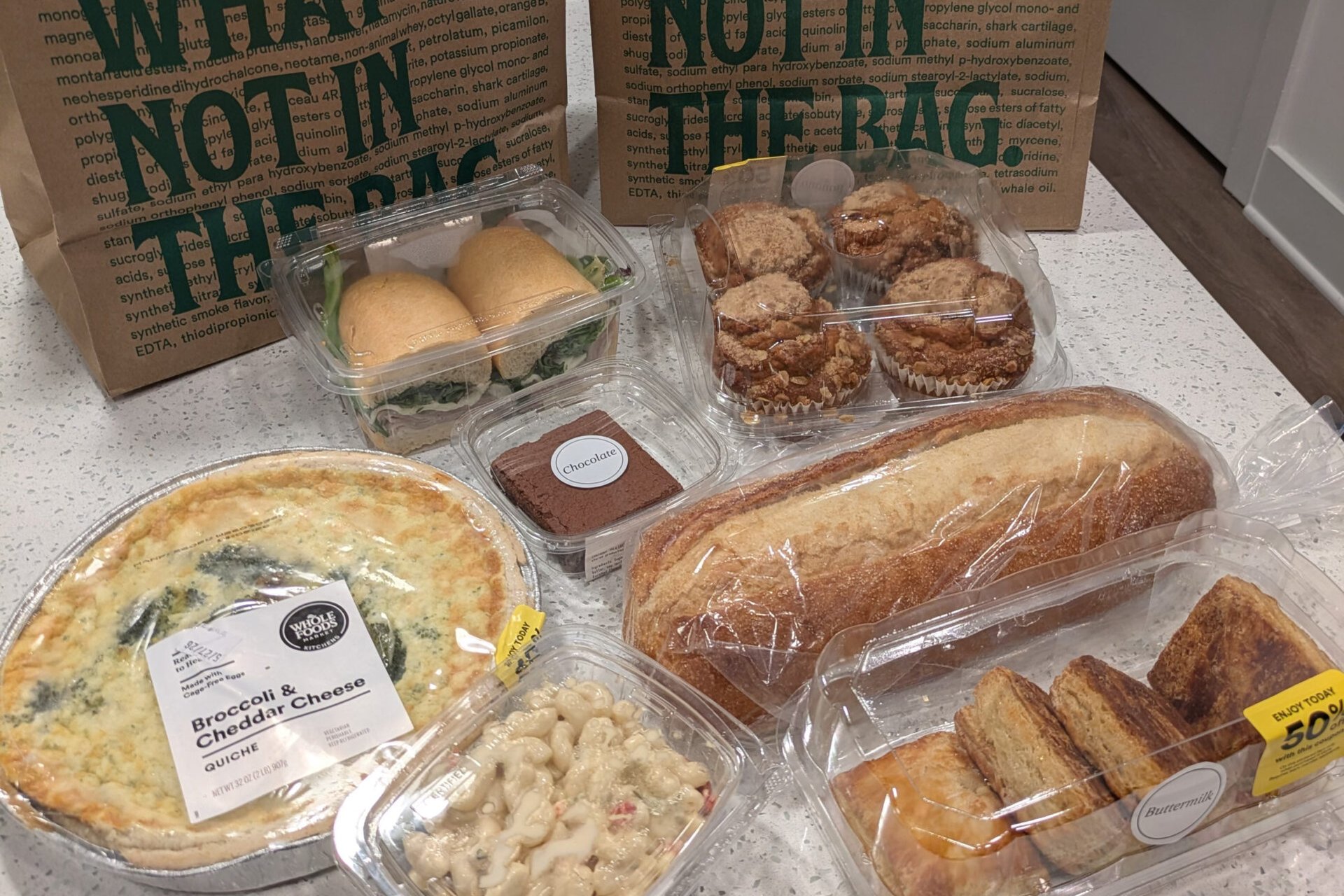
The bags let customers purchase a mix of items nearing their “best-by” date at a reduced price for products worth significantly more, the retailer told USA TODAY. The surprise bags can range in price from $6.99 for a bag of produce worth $21 to $9.99 for a seafood bag worth $30.
The program is one piece of Whole Foods Market’s broader waste reduction strategy, which also includes donations to food banks and composting programs, the grocer said.
“Our program with Too Good to Go makes it easy for customers to get the products they love at a lower price while helping cut food waste,” Nathan Cimbala, Whole Foods Market spokesperson, told USA TODAY. “We’ve seen strong interest since expanding last year, and we’re continuing to grow the offerings.”
Too Good to Go also helps entrepreneurs connect to new and existing customers while solving the problem of wasting surplus food.
Christophe Roberts, founder of Seed Brklyn, a cafe, retail space and art gallery in New York City, said as much as he tries to only have enough baked goods that customers will buy, there is often extra at the end of the day that he doesn’t want to sell at full price the next day.
Offering the baked goods at a steep discount to the community makes sense, Roberts told USA TODAY.
“Being able to offer some type of relief and also not let that go to waste is an amazing aspect of this partnership,” he said.
Roberts said he’s ashamed to admit that early on as a rookie entrepreneur, he was throwing away baked goods that couldn’t be sold. But since offering his baked goods on the app, he can potentially attract new customers to his business, he said.
MacAulay acknowledged that because the contents of the bags are a surprise, there could be some limitations for shoppers who have food allergies. Customers are able to ask at pick-up if there are any items in the bag that contain allergens they may be sensitive to and they can choose not to take the bag and instead get a refund, he said.
Connecting shoppers to businesses is one of several ways that the businesses may sell or donate excess food. They may also donate to local food banks.
MacAulay said the app users aren’t taking away from the other organizations that feed the needy since “there is so much waste inside of the food supply ecosystem or supply chain.”
Flashfood Lets Shoppers Choose What Surplus Items They Want
Another app shoppers are using to get discounted foods specifically from grocery stores is Flashfood. The concept is the same – connecting shoppers with grocers who have surplus food nearing its best-by date – but the difference is shoppers choose specific food items offered up by the grocer in the app to pick up in the store.
Flashfood was founded in Canada about nine years ago and entered the central United States region about four years ago, said CEO Jordan Schenck.
About 40% of the food produced globally goes to waste, in categories such as meat, produce and dairy, said Schenck.
“We were founded with the mission to make sure that it made it to the plates of people,” Schenck told USA TODAY.
The food items, which are available at up to 50% off, are entered into the app at all times of day by grocery partners, she said. Additionally, produce boxes, usually with 10 pounds of fruits and vegetables, are available at a large discount.
Flashfood partners with more than 2,000 grocery stores in 28 states, and earlier this year expanded its pilot program with Kroger.
“By partnering with Flashfood, we’re giving customers another way to save on the groceries they need while ensuring more food is used for its intended purpose – feeding families,” said Kate Mora, president of Kroger Mid-Atlantic. “That is a win for our customers and a win for our communities.”
Flashfood has been offering a solution for shoppers to stretch their grocery dollars for several years, including after the COVID-19 pandemic when inflation was high and more so now, Schenck said.
“Demand is so high from the shopper side to access platforms like Flashfood,” she said. “There’s been a lot of talk and news just about what pricing feels like in this day and age and that’s sort of mobilizing a lot of our growth.”
Betty Lin-Fisher is a consumer reporter for USA TODAY.
Read the full article here