


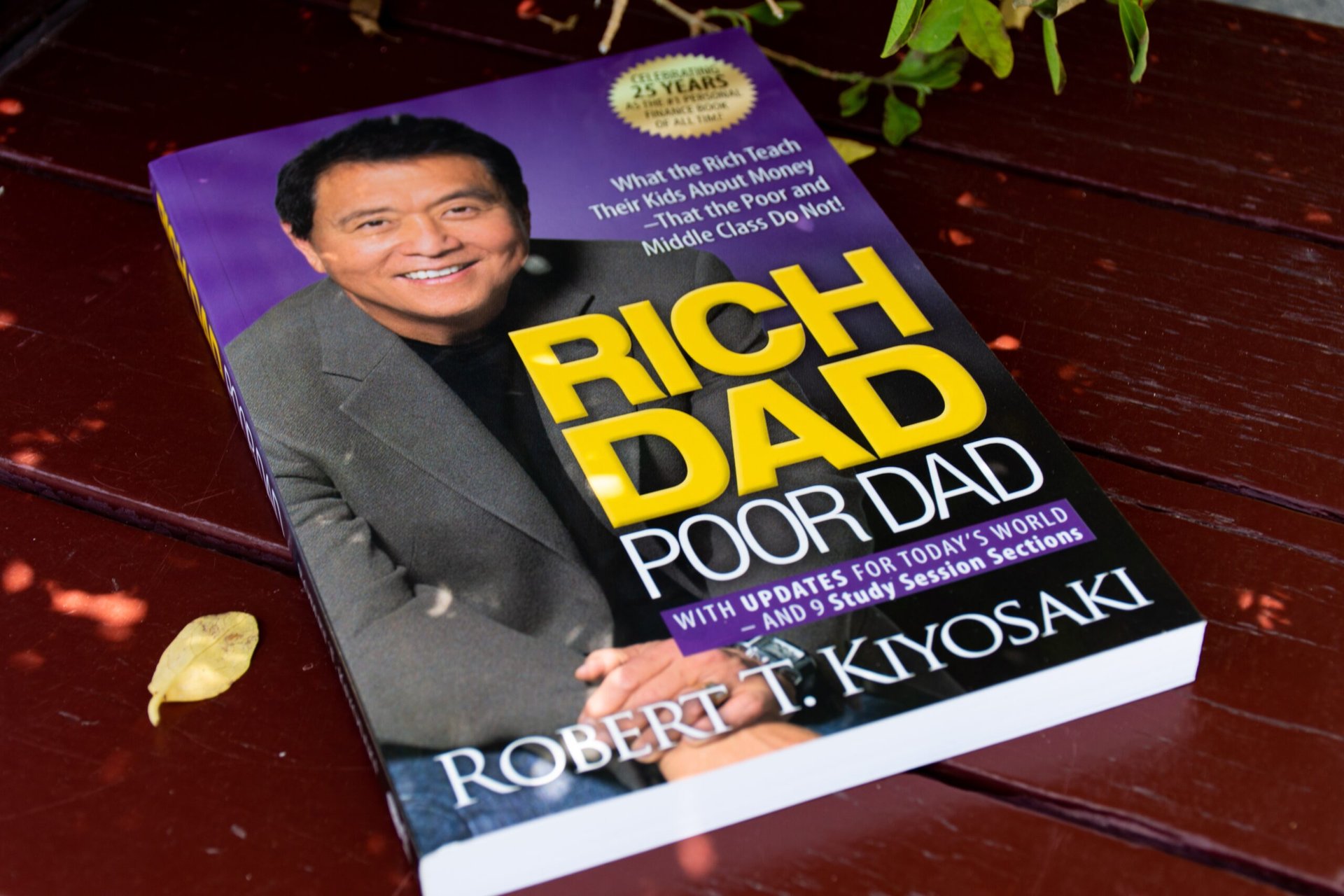

In January 2026, Robert Kiyosaki posted an exuberant message to his millions of followers on X:
“Gold soars over $5,000. Yay!!!! Future for gold $27,000.”
That week, gold was trading near $5,005. Five months later, in June 2026, gold was trading around $4,000.
Did he really mean gold would climb nearly sixfold? Or was he making a different point entirely?
What he actually meant
Kiyosaki has been bullish on gold for years, and the reasoning rarely changes: Government debt keeps expanding, inflation keeps grinding, and the government keeps creating dollars. Hard assets, in his telling, are where you hide from all three.
The $5,000 milestone, when it arrived in late January, validated the direction he had been pointing to for a long time.
The $27,000 figure is borrowed. Kiyosaki ties it to macro strategist Jim Rickards, who argues that if the dollar ever returned to gold backing, the metal would have to reprice dramatically to cover all the currency now in circulation.
It is a hypothetical built on a hypothetical: a monetary regime change that no one in Washington is proposing, priced to a number that assumes it happens.
The part that gets left out
Kiyosaki will tell you $27,000 was never a this-year prediction. He says short-term swings do not influence him, and that he keeps buying gold, silver and bitcoin regardless of the price on any given Tuesday. Fair enough.
But “long-term” is carrying a heavy load here. Gold did not drift sideways after his post. It reached a January record, with Trading Economics reporting an all-time high of $5,608.35, then it fell to near $4,000 by late June. A long-term call can survive a dip. It is the distance that strains this one: From here, $27,000 is more than a sixfold climb.
Why gold fell
Inflation worries tied to the U.S.-Iran conflict lifted rate fears, the dollar strengthened, and speculative money that piled in during the run started moving back out. The World Gold Council said March was gold’s weakest month since June 2013. Exchange-traded fund demand cooled sharply after earlier strength. Around June 20, Goldman Sachs cut its year-end target by $500.
None of this means gold is a bad place to keep money. Central banks are still buying, and major banks still see it higher over time. JPMorgan has projected gold averaging $6,000 in the final quarter of 2026 and rising toward $6,300 by the end of 2027.
Set that beside Kiyosaki’s borrowed figure: Even a bullish Wall Street target near $6,000 is less than a quarter of $27,000.
The number was the problem, not the metal
Here is a useful distinction for anyone holding gold or considering it. There is owning the asset, and there is chasing a price someone posted on social media. They are not the same activity.
Act on the headline number, and you are betting it comes true. The targets keep getting bigger: $27,000 gold, $200 silver, $250,000 bitcoin. The person who simply holds gold as one steady piece of a retirement plan is making no such bet. It does not matter what Kiyosaki posted in January, and gold need not reach $27,000 to have done its job.
That is the unglamorous advantage of treating gold as ballast rather than a lottery ticket. You are not exposed to being wrong about a number, because you never made the bet.
For savers who want gold in the mix, a gold IRA is one way to hold it inside a retirement account. It works best as one measured piece of a broader plan rather than the whole bet. A handful of firms dominate the space, and the terms vary widely, so it is worth checking the top 10 gold IRAs.
Thanks, Robert, but I’ll watch the spot price
Kiyosaki himself knows the difference. In May, the same author who floated $27,000 gold warned that even gold, silver and bitcoin can cost you money if bought on hype. It is sound advice. It would have been more useful in January.
Gold may well go higher from here. Plenty of serious people think so. But “higher” and “$27,000” are separated by a chasm no headline number can bridge, and the gap between them is exactly where a careful investor decides how much to believe.
Read the full article here