


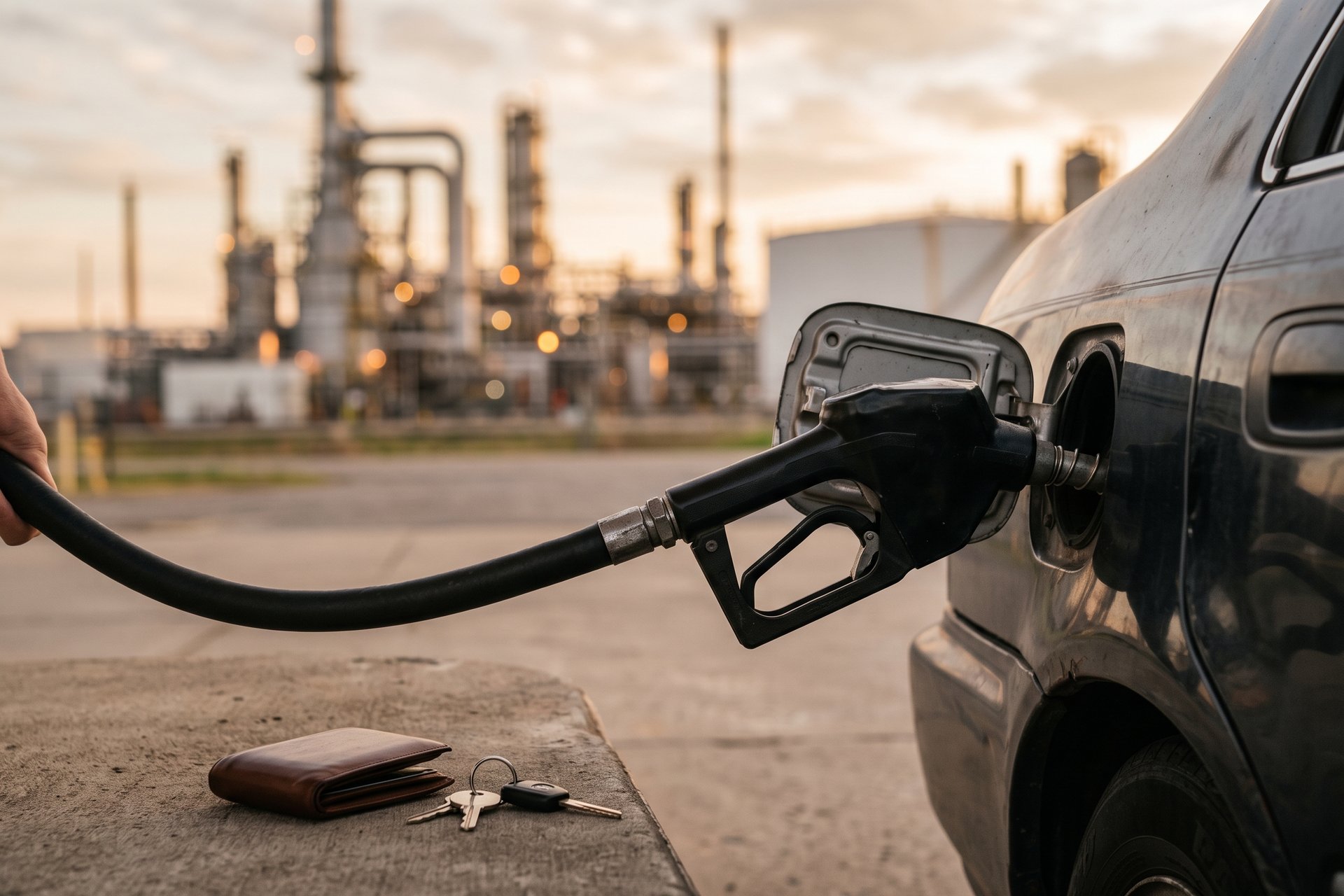

President Donald Trump is pushing for a ban on diesel exports as prices reached record highs, but some observers worry that the move could cause prices to spike even more.
Trump and several U.S. candidates in competitive races have called for export bans as the national average price for diesel fuel rose to a record $6.52 per gallon on Wednesday, Sept. 23, according to AAA. That figure is up 21 cents from a national diesel average of $6.31 one week earlier. A year ago, the national average was $3.69 per gallon, an increase of about 77%.
Why Diesel Costs More Than Regular Gas
Diesel fuel was historically cheaper than regular gasoline, except during exceptionally cold winters when demand for diesel and other heating oils rose. That trend started reversing around September 2004, according to the U.S. Energy Information Administration.
The agency attributed higher diesel costs to three factors:
- Higher demand, especially in Europe, China, India and the United States
- Increased production and distribution costs from the transition to lower-sulfur diesel fuel in the United States
- A higher federal tax on on-highway diesel fuel: 24.40 cents per gallon, compared with 18.4 cents for gasoline
Would a Diesel Export Ban Lower Prices?
Patrick De Haan, head of petroleum analysis at GasBuddy, said in an X post that an export ban might temporarily lower diesel prices, but any relief could be fleeting. It also would not be felt uniformly across the country and could result in higher regular-gas prices.
“Banning diesel exports is unlikely to be successful in pushing diesel prices down aside from Gulf states … it will likely push refiners to cut production rates, which could mean even higher gasoline prices as well,” he wrote. “Conventional wisdom that it’ll lower prices? It’s a trap.”
That analysis has not stopped Republican political candidates who are feeling pressure from voters over high fuel prices from calling for export bans.
“The war in Iran needs to end to bring costs down — but Michigan families can’t afford to wait,” Rep. Mike Rogers, a Michigan Republican who is the party’s U.S. Senate nominee, said in a Sept. 21 X post. “Here’s what we can do now: place a temporary embargo on diesel exports. American energy should provide relief to American families first.”
“The House should return to D.C. immediately to work to pause diesel exports, suspend the gas tax, fully unleash E15 and biodiesel, and work on a diesel relief program for truckers and farmers,” Rep. Ashley Hinson, an Iowa Republican who is also her party’s U.S. Senate nominee, said in a Sept. 22 X post. “Americans need relief, and I’ll work with anyone to deliver.”
How the Administration Has Tried to Lower Fuel Prices
Trump has said recently that high prices are a “small price to pay” for Americans facing the economic consequences of record-high diesel prices. But the administration has made several attempts this year to lower gas prices as voter concerns about pump prices have mounted.
In July, the White House touted the launch of 25 Freedom Fuel gas stations in the Northeast, all selling fuel at $3.47 a gallon. But the stations were concentrated in Pennsylvania and New Jersey and appeared to have little impact on prices in those states. The average price of gas in Pennsylvania on Sept. 23 was $4.55 per gallon, and the average price in New Jersey was $4.40.
Trump has also pressured gas retailers to lower prices, accusing them of price gouging as oil prices started to fall.
He has pushed Congress to pass legislation allowing year-round sales of higher-ethanol E15 gasoline as lawmakers grapple with rising fuel prices. In an updated 2026 budget request sent to Congress on June 24, the White House called for a law codifying the “permanent, year-round sale” of E15, saying the change would expand consumer choice and support domestic fuel production.
What Drivers Can Expect
GasBuddy’s De Haan said gas prices are likely to remain elevated as long as military conflict continues in the Middle East.
“While most of the country transitions to cheaper winter-blend gasoline this week, the scale of ongoing geopolitical escalations makes meaningful price relief unlikely in the near term,” De Haan wrote. “Motorists should brace for continued volatility ahead.”
Joey Garrison, a White House correspondent for USA TODAY, contributed to this report. Keith Laing is an automotive reporter on the National Trending Desk at USA TODAY.
Read the full article here