


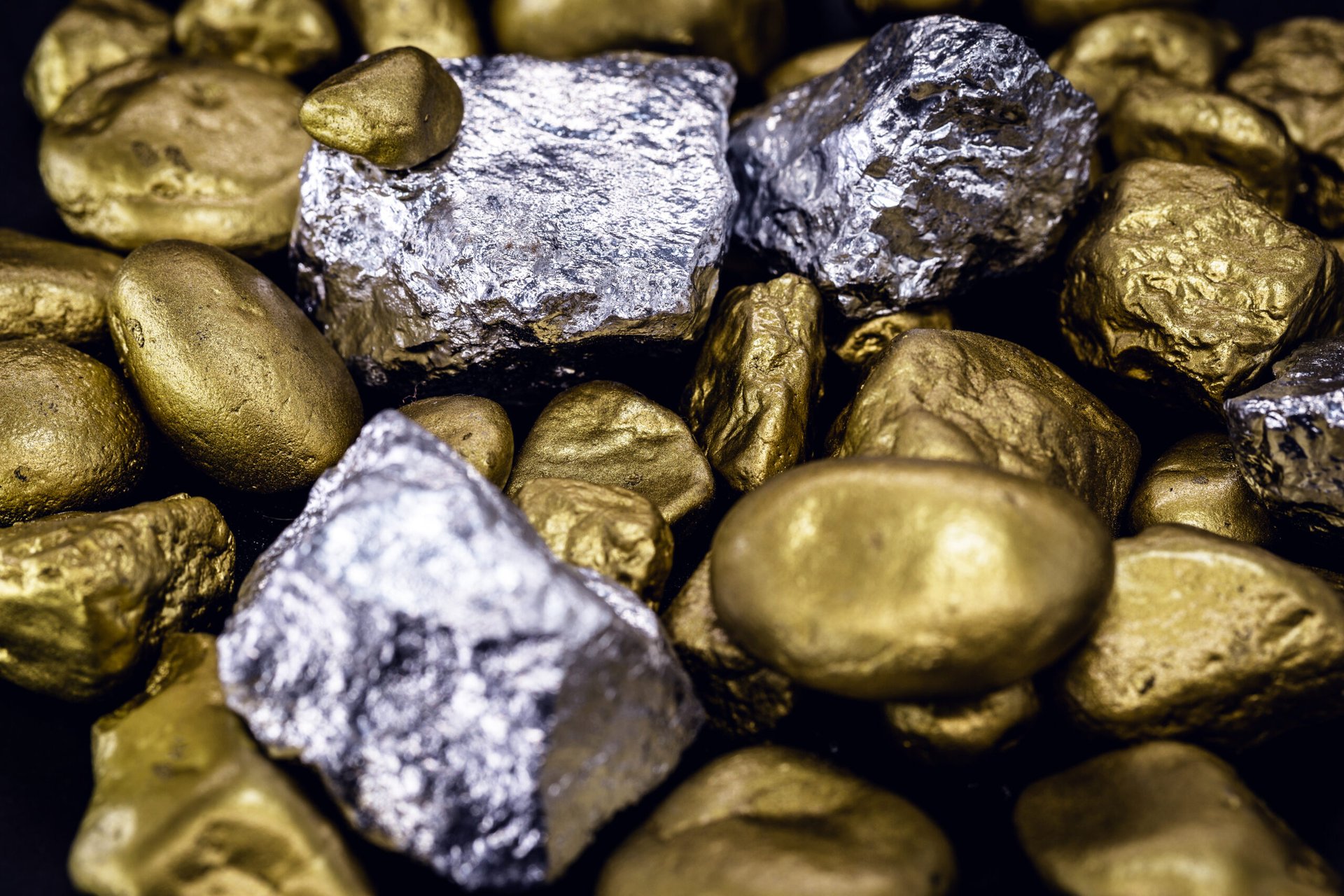

Humans have prized precious metals for thousands of years, as money, as jewelry, as a store of wealth and more recently as industrial inputs. Precious metals have had a remarkable run, with gold, silver and platinum all hitting record highs in 2026. Palladium has yet to return to its 2022 peak.
Are they worth considering for your portfolio? Maybe, depending on your retirement plan. Brian Kilmeade from Fox News trusts Anthem Gold Group to protect your cash and retirement accounts with physical gold and silver. Minimum investment $10,000.
Why precious?
Precious metals combine scarcity with unusual chemical stability. Gold resists oxidation and corrosion so well that coins pulled from centuries-old shipwrecks still gleam. Silver tarnishes and the others hold up to varying degrees, but all resist decay and corrosion.
Scarcity contributes to value. All the gold ever mined would fit inside a 22-meter cube, roughly the height of a seven-story building. Miners add only about 3,672 tons a year.
Silver is far more plentiful at some 26,000 tons a year.
The platinum-group metals are the rarest of all: Annual platinum output runs near 170 tons and palladium under 200. Compare that with the roughly 23 million tons of copper dug up annually, and “precious” starts to make sense.
Practical uses
Industry accounts for well over half of annual demand for silver, a record 680 million ounces in 2024. It is the most electrically conductive element and is used in solar panels, electric-vehicle parts, phones, and data-center hardware. Solar alone has grown from a rounding error a decade ago to roughly one-sixth of total silver demand.
Platinum and palladium are extensively used by the automotive industry. Both scrub pollutants from exhaust inside catalytic converters, and for palladium, that single job is roughly 80% of demand.
Platinum is used more widely, in industrial catalysts, jewelry and hydrogen fuel cells, but cars remain its largest buyer.
Gold is the exception. A lot of it goes into jewelry, with investors and central banks taking much of the rest. Only about 7% of demand is industrial, mostly electronics, though artificial intelligence hardware has nudged that higher.
As investments
The investment case is simple: These are hard assets you hold outright. Unlike paper money, no government can print more of them when it runs short or inflation bites, and their value does not depend on a company staying solvent.
That independence from paper currency is part of gold’s draw, and central banks have been buying hard: more than 1,000 tons of gold a year from 2022 through 2024, and another 863 tons in 2025, even as American investors keep buying.
Gold has held its value over centuries, though it works best as a long-term inflation shield. It responds heavily to investment and monetary forces: interest rates, the dollar, central-bank buying and fear.
Silver feels those same forces but carries a much larger industrial load, which is why it swings wider than gold in both directions. Platinum and palladium track the industrial economy, especially the car market.
Worth considering
If precious metals have a place in your plan, the question is not whether to buy but which ones, and why. If you are ready to hold the physical metal, it pays to know how to buy and store it safely.
Anthem Gold Group is committed to helping investors protect their wealth and retirement with physical precious metals. It offers gold, silver, platinum and palladium coins and bars delivered directly to your home.
Plus, enjoy up to $25,000 in complimentary gold and silver, along with waived IRA storage fees for up to 10 years. The minimum to get started is $10,000, but it costs nothing to take a look now.
Read the full article here