


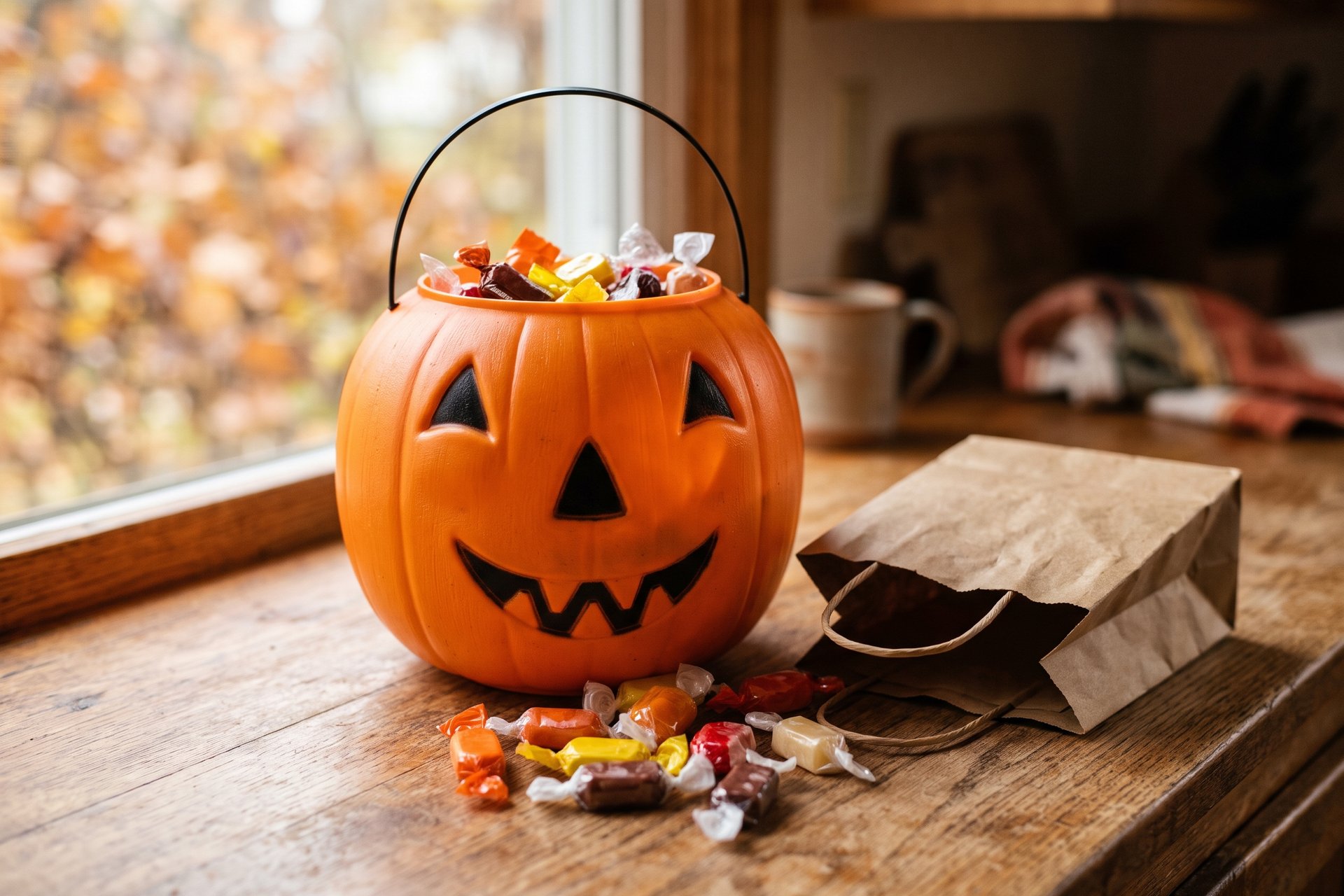

Halloween candy sales are lagging behind last year’s pace as Americans grapple with rising living costs and elevated chocolate prices, raising questions about how much consumers will spend on trick-or-treating this year.
Halloween candy sales fell 6.7% in the month ending Oct. 17 compared with the same period in 2025, according to market research firm NielsenIQ, The Associated Press reported. NielsenIQ also recorded an 11.7% decline in candy sales in mid-September, wiping out preseason gains from the previous two years.
Candy and gum prices have climbed 44% over the past five years, compared with a 22.5% increase in prices for food eaten at home, according to The Associated Press.
Rising costs for other necessities are also squeezing household budgets. Chris Costagli, a vice president at NielsenIQ, told The Associated Press that higher expenses for gas, housing and groceries are leaving some consumers with less money to spend on Halloween candy.
Why Are Halloween Candy Prices So High?
Fox News reported that candy and chewing gum prices rose 8.1% in August compared with a year earlier, more than double the 3.4% increase in overall consumer prices during the same period.
Chocolate prices have been especially affected by rising cocoa costs. Global cocoa prices hit a record $10,710 per metric ton in January 2025 amid poor weather in West Africa, which supplies about 70% of the world’s cocoa, and because of speculative trading in cocoa futures.
Prices later fell before beginning to climb again in the spring. Disruptions to fertilizer supplies linked to the Iran war and forecasts for hot, dry weather associated with El Niño have added to concerns about cocoa production.
How Are Shoppers Adjusting Their Halloween Spending?
Consumers appear to be changing how much candy they buy. NielsenIQ found that small bags were the only package sizes recording sales growth through mid-October, while large and extra-large bags experienced the steepest declines.
Some shoppers may also be waiting until closer to Halloween to make purchases. Sally Lyons Wyatt, a global executive vice president and food industry adviser at market research firm Circana, told the AP that consumers have increasingly been making smaller, more frequent grocery trips and buying products closer to when they plan to use them.
Discounts are another strategy. More than a third of consumers surveyed by the National Retail Federation said they planned to compare prices if Halloween merchandise costs more than expected, while just over a quarter intended to look for coupons or sales.
Halloween Spending Could Still Rise
Despite the sluggish candy sales, the National Retail Federation expects Americans to spend $4.1 billion on Halloween candy this year. Overall Halloween spending is projected to reach $13.5 billion, up from $13.1 billion in 2025, according to the trade group’s survey.
The National Confectioners Association, which represents candy makers, also expressed optimism about the season.
“We are just now entering the peak period for Halloween and consumer enthusiasm remains incredibly strong,” the group said in a statement Friday to the AP.
Lyons Wyatt acknowledged that candy sales could remain soft but said the holiday could still deliver a strong showing.
“I do believe we will still see softness overall with candy, but I don’t think Halloween is doomed,” she told the AP.
Reporter Anthony Thompson can be reached at [email protected], or on X @athompsonUSAT.
Reporting by Anthony Thompson, USA TODAY / USA TODAY
USA TODAY Network via Reuters Connect
Read the full article here