


You’re not imagining it, and you’re not a bad shopper. Beef really did get that expensive.
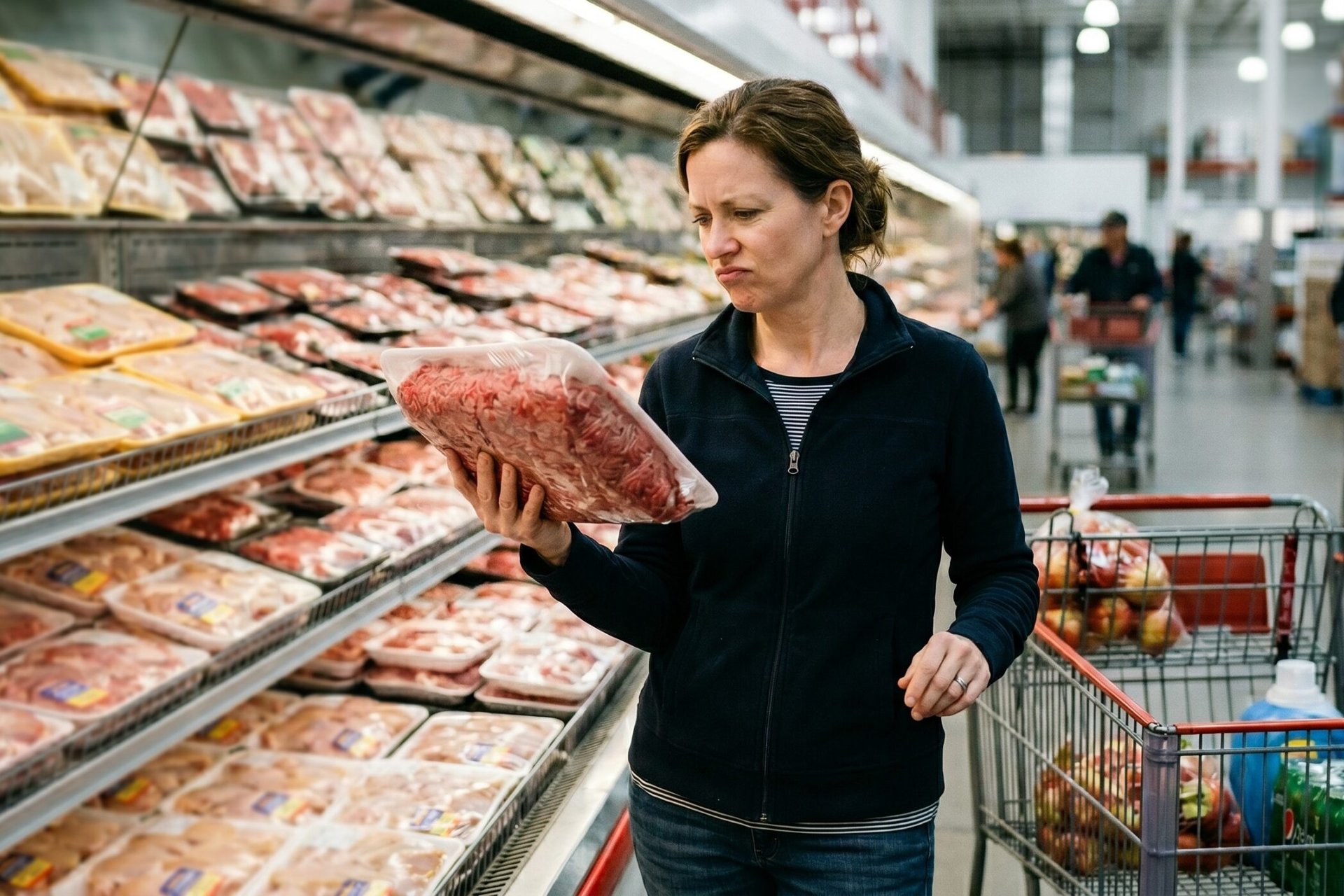
In October, a pound of 100% ground beef averaged $6.76, according to Bureau of Labor Statistics price data released Nov. 10. In January 2020, the same pound cost $3.89. That’s a 74% jump for plain old hamburger.
The problem isn’t you. It’s cows — or the lack of them.
In January 2026, the U.S. Department of Agriculture counted 86.2 million cattle and calves in the U.S., down from 86.5 million a year earlier. Clemson University’s livestock specialists called it a 75-year low, and Bloomberg reported it’s the smallest herd since 1951.
Ranchers aren’t rushing to rebuild. Oklahoma State University agricultural economist Derrell Peel wrote in March that rebuilding the beef cow herd will stay a slow process. In fall 2025, he wrote that cattle prices are likely to stay high for much of the rest of the decade.
Meanwhile, the USDA’s Economic Research Service expects beef and veal prices to rise 8.7% this year. That’s one reason grocery prices are on such a wild ride.
So stop waiting for beef to get cheap. Start buying it the way a butcher would.
1. Buy the cut that eats like a pricier one
Steak is where a beef budget goes to die. A pound of boneless USDA Choice sirloin averaged $13.85 in October, per the BLS. A boneless USDA Choice chuck roast? $9.08.
That’s $4.77 a pound less — roughly a third off. Make a 3-pound pot roast instead of 3 pounds of sirloin, and you keep about $14.30.
Chuck comes from the shoulder, a hardworking muscle, so it’s tougher. That’s not a flaw. It’s a cooking instruction. Braise it, stew it or put it in a slow cooker, and it turns fork-tender.
Ground chuck, at $6.73 a pound in October, costs about half the $12.85 average for all uncooked steaks. Tacos and meat sauce won’t know the difference.
2. Buy the big piece and cut it yourself
Every time a butcher slices a roast into steaks, you pay for the knife work.
The BLS numbers show it. A boneless USDA Choice round roast averaged $8.37 a pound in October. Boneless round steak, from the same part of the animal, averaged $10.11. That’s a $1.75-a-pound premium for having it sliced into steaks.
Buy a 4-pound round roast, cut it into steaks at home, and you’ve kept about $7 for a few minutes with a sharp knife.
Don’t trust your knife skills? Ask the meat counter to slice it. Asking costs nothing.
3. Do the real math on freezer beef from a farm
A quarter or half of a steer from a local rancher can be a great deal — or a trap, if you don’t understand the pricing.
Many farms quote a price per pound of hanging weight. That’s the weight of the carcass before it’s cut, trimmed and boned. You won’t take all of it home.
An Oklahoma State University Extension guide to buying beef for home freezers puts the loss from cutting and trimming at about 25% for a typical carcass — and anywhere from 24% to 45%, depending on the animal.
So divide the hanging-weight price by the share you actually keep. Say a farm quotes $7 a pound hanging weight, processing included. At the 70% yield OSU uses in its example, you’re really paying $10 for each pound that lands in your freezer.
That’s more than store ground beef, but far less than sirloin. And you get the whole mix: steaks, roasts and ground beef.
Two more checks. Ask whether cutting and wrapping fees are included or extra. And measure your freezer. OSU’s rule of thumb is a cubic foot of space for every 35 to 40 pounds of wrapped meat.
In OSU’s example, a half yields about 225 pounds of cuts. A quarter would be roughly 110 pounds — call it 3 cubic feet.
Quick aside — most internet financial advice comes from people who weren’t alive during the last recession. I’ve been writing about money for more than 35 years. Want rock-solid advice? Sign up for the free Money Talks Newsletter. Takes 10 seconds. No fluff. No spam.
4. Shop the big packs, but read the unit price
Warehouse clubs and supermarket family packs sell beef in bulk. Bulk can mean a lower price per pound, but not always.
The shelf tag tells you. Look for the unit price — the cost per pound — and compare it with your supermarket’s sale price, not its regular price. And buy a big pack only if you’ve got the freezer space to handle it.
If you’re a club member, here are six things worth buying at Costco.
Ignore the fancy branding. Compare the lean-to-fat ratio, like 80/20 or 90/10, and buy the cheapest package that matches what you need.
And if you’re not sure which store near you has the best prices, here’s the cheapest grocery store in every state.
5. Buy the markdowns stock up on sales
Stores mark down beef as its date gets close. That’s not a red flag. It’s an opportunity.
According to the USDA’s Food Safety and Inspection Service, a sell-by date is there for the store, to help it decide how long to keep the package on the shelf. It’s an inventory tool, not a safety deadline. Except for infant formula, federal rules don’t even require product dates.
The catch: Fresh beef doesn’t last long. FoodSafety.gov says ground beef keeps one to two days in the fridge, and steaks and roasts three to five days. So buy the markdown, then cook it or freeze it that day.
Date labels are just one of the food rules plenty of us have wrong.
The same goes for the weekly ad. When chuck roast or ground beef goes on sale, buy for the freezer, not just for tonight — the idea behind these 21 items worth stocking up on.
6. Stretch ground beef with beans or mushrooms
The easiest trick on the list: Use less beef.
University of Illinois Extension suggests blending finely chopped vegetables, mushrooms included, into ground meat for burgers, meatballs and meatloaf. Each pound of meat makes more servings.
Beans do the same job in chili and tacos, and the math is hard to argue with. Dried beans averaged $1.68 a pound in October, per the BLS. Ground beef averaged $6.76.
Make a pot of chili with 1 pound of ground beef instead of 2, and add a half pound of dried beans. You’ve cut $6.76 worth of beef and added about 84 cents of beans. That’s nearly $6 saved per pot.
7. Freeze it right so you don’t waste it
None of this works if your bargain beef turns into gray, freezer-burned leather.
Set your freezer at 0 degrees Fahrenheit or colder. North Dakota State University Extension says food kept constantly at that temperature stays safe. It’s the quality that slips over time.
Freezer burn is food drying out because air reached its surface. It won’t hurt you, but it makes good beef taste like cardboard.
The supermarket wrap is fine if you’ll use the meat within about a month, NDSU says. For longer, overwrap it in heavy-duty foil, plastic wrap or freezer paper, or put it in a freezer bag.
For best quality, use frozen ground beef within three to four months, and steaks and roasts within four to 12 months, per FoodSafety.gov. Write the date on every package.
When it’s time to cook, thaw beef in the fridge, in cold water or in the microwave — never on the counter. For more ideas, see these seven things you should freeze instead of tossing.
The bottom line
Don’t count on beef getting back to $3.89 a pound anytime soon. The herd is small, ranchers are rebuilding slowly, and the USDA expects beef prices to finish 2026 up about 8.7%.
But you don’t need cheap beef to eat beef cheaply. Buy the cut, not the label. Buy the big piece. Run the numbers on farm beef. Grab the markdowns, stretch the ground beef and freeze it right.
Do even three of these, and you’ll feel it at the register.
Read the full article here