


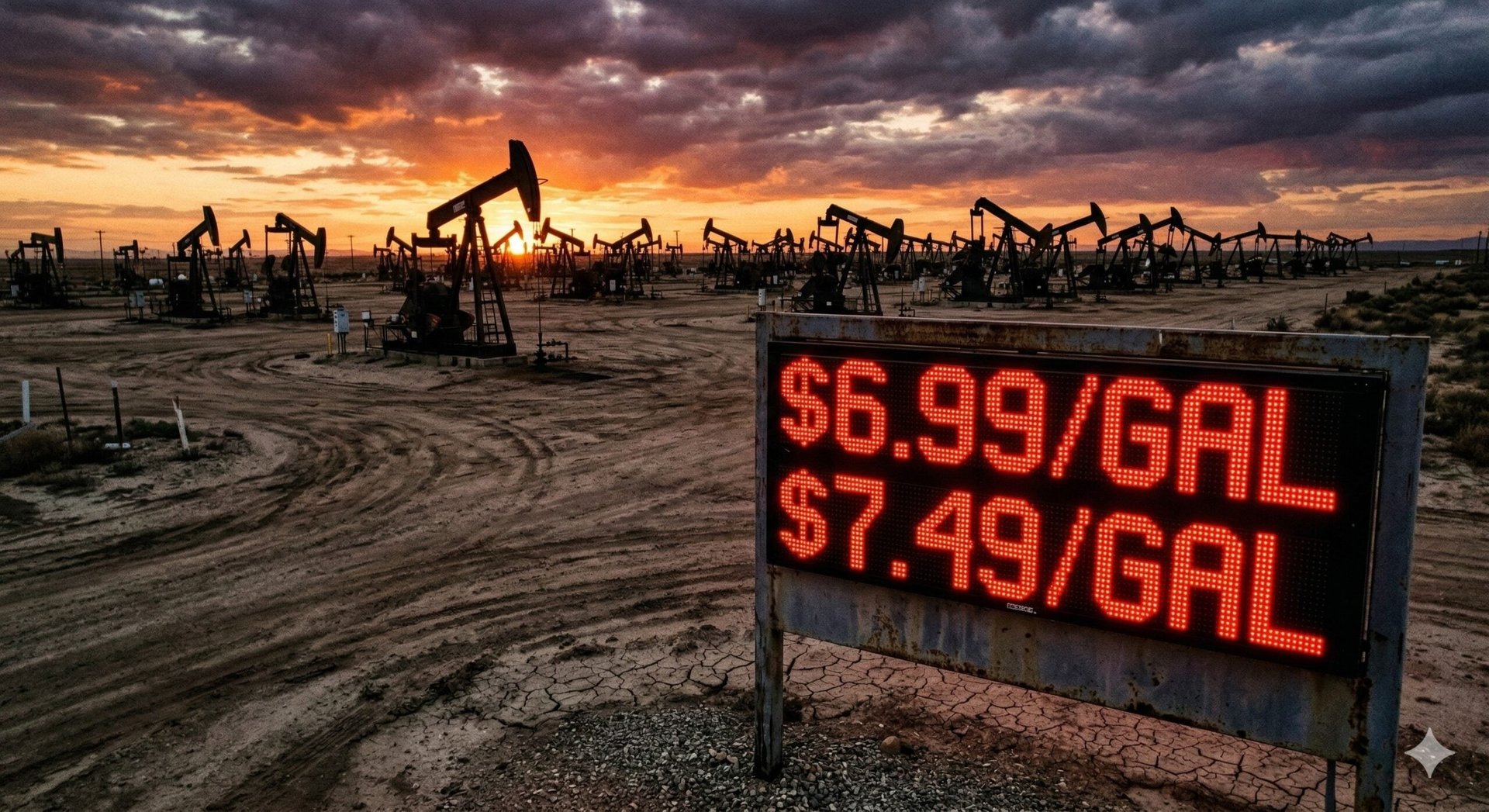

It’s a question I hear every time a geopolitical crisis hits the news. If the United States is the undisputed heavyweight champion of crude oil production, why do our gas prices skyrocket the second trouble brews in the Middle East?
Right now, we’re watching the conflict with Iran push oil prices past $100 a barrel for the first time since 2022. You might look at the pump, look at our domestic drilling numbers, and feel like you’re being scammed.
I don’t blame you. It doesn’t make intuitive sense. But the reality of how gasoline gets priced isn’t about patriotism or national borders. It’s about global economics and refining bottlenecks.
Here’s why your wallet is taking a hit, even though we’re swimming in domestic oil.
The United States pumps a staggering amount of oil
Let’s get the facts straight first. We aren’t lacking domestic supply. According to the U.S. Energy Information Administration, domestic crude oil production hit record highs recently, churning out over 13.6 million barrels per day.
We produce more crude than Saudi Arabia. We produce more than Russia.
If we were completely isolated from the rest of the planet, that would mean dirt-cheap gas for everyone. But we don’t live in an isolated bubble.
Oil is a globally traded commodity
This is the hardest pill to swallow. The oil pulled out of the ground in Texas isn’t reserved for American drivers. It’s sold on the open global market to the highest bidder.
Because oil is fungible and traded worldwide, a supply shock anywhere is a price shock everywhere. Right now, the war with Iran is severely disrupting the Strait of Hormuz. That single narrow waterway is a choke point for the world’s energy supply.
When global buyers panic about losing Middle Eastern oil, they start bidding up the price of all oil, including the stuff produced right here at home.
If a barrel of crude jumps past $100 globally, an American oil company isn’t going to sell it to a domestic refinery for $60 just to be nice. They’re going to sell it at the global market rate. That higher cost is immediately passed on to you at the pump.
The refinery bottleneck
There’s another step between the oil rig and your gas tank. Crude oil is useless until it’s refined into gasoline, diesel, and jet fuel.
Even with record crude production, our refining capacity is tightly constrained. Refineries are complex, expensive, and frequently undergo maintenance.
Plus, they have to switch to more expensive summer-grade fuel blends every spring to meet environmental regulations. If a major refinery goes offline for maintenance or an emergency, local gas prices will spike regardless of how much crude is sitting in storage.
What you can do about it
You can’t control global markets or international conflicts, but you can control your own consumption. You don’t have to just accept paying top dollar. Here are a few ways to fight back:
- 1. Fix your bad driving habits: Aggressive driving, speeding, and hard braking are terrible for your wallet. As we detail in “Driving Habits That Are Secretly Ruining Your Car and Draining Your Gas Tank,” a lead foot can lower your gas mileage by 15% to 30% at highway speeds.
- 2. Check your tire pressure: Under-inflated tires drag down your fuel efficiency. It’s a quick fix that genuinely saves money over time.
- 3. Shop around strategically: Use apps to find the cheapest station near you, or explore “8 Smart Ways To Save Money at the Gas Pump” for more tips on finding the lowest prices, like buying gas at warehouse clubs or using rewards programs.
If you want more practical advice on surviving these price surges, check out our recent guide on “The Return of $5 Gas? How the Strait of Hormuz Chaos Hits Your Commute.”
Read the full article here