


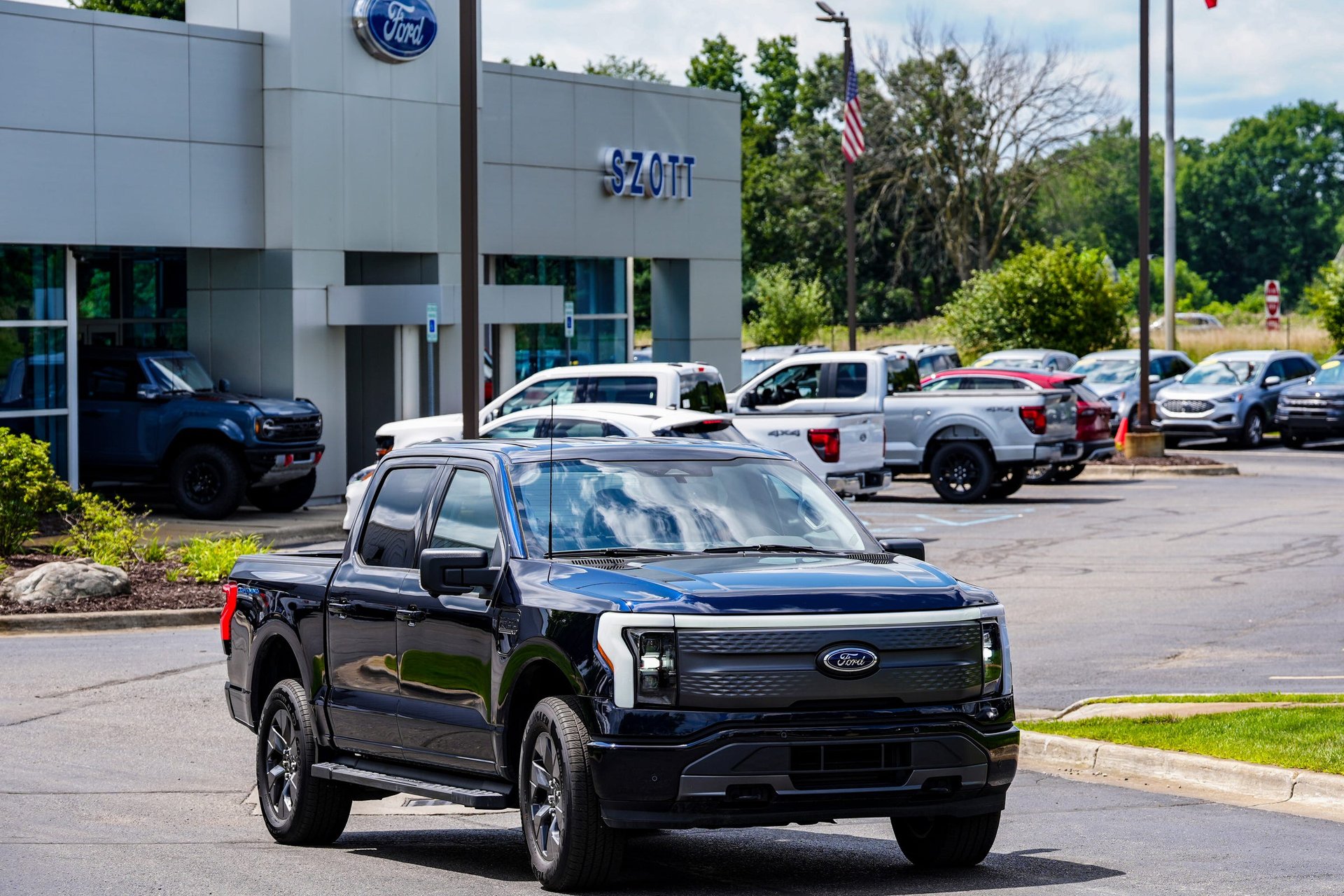

Car buyers are getting hit from all angles these days, but experts offer advice on ways you can still find a deal.
New-Car Prices and Discounts
According to Kelley Blue Book, data released the week ending Sept. 11 showed the average U.S. new-vehicle transaction price climbed to $50,089 in August. That’s the first time it has crossed the $50,000 threshold this year.
The price is 1.9% higher than a year ago. The average transaction price reflects what a buyer paid for a car after accounting for the trade-in value. Kelley Blue Book average transaction prices do not include applied consumer incentives.
The average Manufacturer’s Suggested Retail Price (MSRP), in other words, the window sticker, also climbed last month. It was $51,852, up 2.2% year over year, Kelley Blue Book said.
Which gets to the next issue: Carmaker discounts.
Kelley Blue Book’s data showed that automakers offered fewer incentives last month. The average incentive in August amounted to 6.5% of the transaction price, down from 7.2% in the year-ago August. That means if a car’s transaction price was $40,000, the average discount last month was about $2,600 compared with $2,880 a year earlier.
“We see new car prices continue to go up, the manufacturers are cutting back the number of incentives to help move those cars and we’re seeing a delay in the 2027 model year cars coming to market,” Ray Shefska, co-founder of CarEdge, told the Detroit Free Press, part of the USA TODAY Network, on Sept. 11. “It’s indicating to me those prices on 2027 models will likely go up, too.”
CarEdge is a consumer platform that helps people research, shop for and negotiate new and used vehicle purchases. Shefska said he believes automakers are holding on to incentive money until November and December and will make a big year-end push to sell down the 2026 models. At that time, many dealers will be motivated to move inventory, too.
Shefska’s advice: “If someone is looking for a new car, the play is to wait until as long as they can into December.”
Price Inflation Is Real
According to Shefska, who checks Automotive News every day for the average marketed new-car price, the price on Sept. 11 was the highest he’s seen it hit yet. The average marketed price for a new vehicle was $52,576. That’s $2,682 more than the year-ago period, he said. Average marketed price means the price consumers see on dealership websites.
While new-car “price inflation is real,” automotive price increases have been moderate in recent years, Erin Keating, executive analyst at Cox Automotive, which owns Kelley Blue Book, said in a statement. Still, she said, most American households face financial pressure, which is steering more shoppers toward lower price points.
“We expected transaction prices to move back above the $50,000 mark in 2026, as new-vehicle prices typically increase through the year and especially in the second half, when next-model-year vehicles begin arriving at dealerships,” Keating said. “The continued strong growth of subcompact SUVs highlights how important affordability remains in today’s market.”
The subcompact SUV segment has the lowest average transaction price. In August, the average transaction price in that segment was $31,149, up 2.2% year over year, Kelley Blue Book data showed.
According to Kelley Blue Book, here are the average transaction prices in August for Detroit’s automakers across their lineup of brands:
- Ford: $60,106, up 4.6% from $57,440 in August 2025.
- General Motors: $54,255, up 0.9% from $53,770 in August 2025.
- Stellantis: $58,833, up 5.5% from $55,754 in August 2025.
How to Survive Sky-High Prices
Shefska said the sky-high price of new cars “tells you everything you need to know.”
“Even though every automaker and every dealer has said affordability is a crisis, they’re not doing anything about it,” Shefska said. “Every one of these automakers are producing fewer cars; inventory levels are lower than they have ever been; they are cutting back their incentives, too. Once they wholesale the car to the dealer, the manufacturers have made their money. So the rich are the folks who are buying them and the rest of us” are getting you-know-what.
With new-car prices peaking, stronger demand is emerging for affordable used vehicles — if you can find them. Shefska suggests that if you need a car, you be open to buying a retired service-loaner car that has been turned into a certified pre-owned vehicle.
A certified pre-owned car usually comes with a full warranty, and a buyer can see significant savings by choosing a vehicle with a few thousand miles on it. He said buying such a vehicle can result in $6,000 to $8,000 in savings. Also, Shefska said most dealers keep service-loaner fleets active for only four to six months before certifying and selling them, so they become restocked regularly.
If you are seeking an older-model used car or one that is not certified, good luck. Shefska said used-vehicle demand increased 2.3% year over year in August, while the average used price held at $30,200 for the fourth consecutive month. He got his used-car data from CarGurus.
Those used vehicles priced below $30,000 carried only about a 52-day market supply. The industry norm is 60 days. Yet used vehicles priced above $80,000 sat for an average of 91 days, Shefska said.
Put simply, the affordable cars that consumers want most are selling much faster than high-priced inventory.
Shefska added, “We’re going to see the younger, used-car prices continue to go up because the new-car prices continue to go up. One doesn’t happen without the other.”
Jamie L. LaReau is the senior autos writer at USA TODAY Co. who covers Ford Motor Co. for the Detroit Free Press.
Read the full article here