


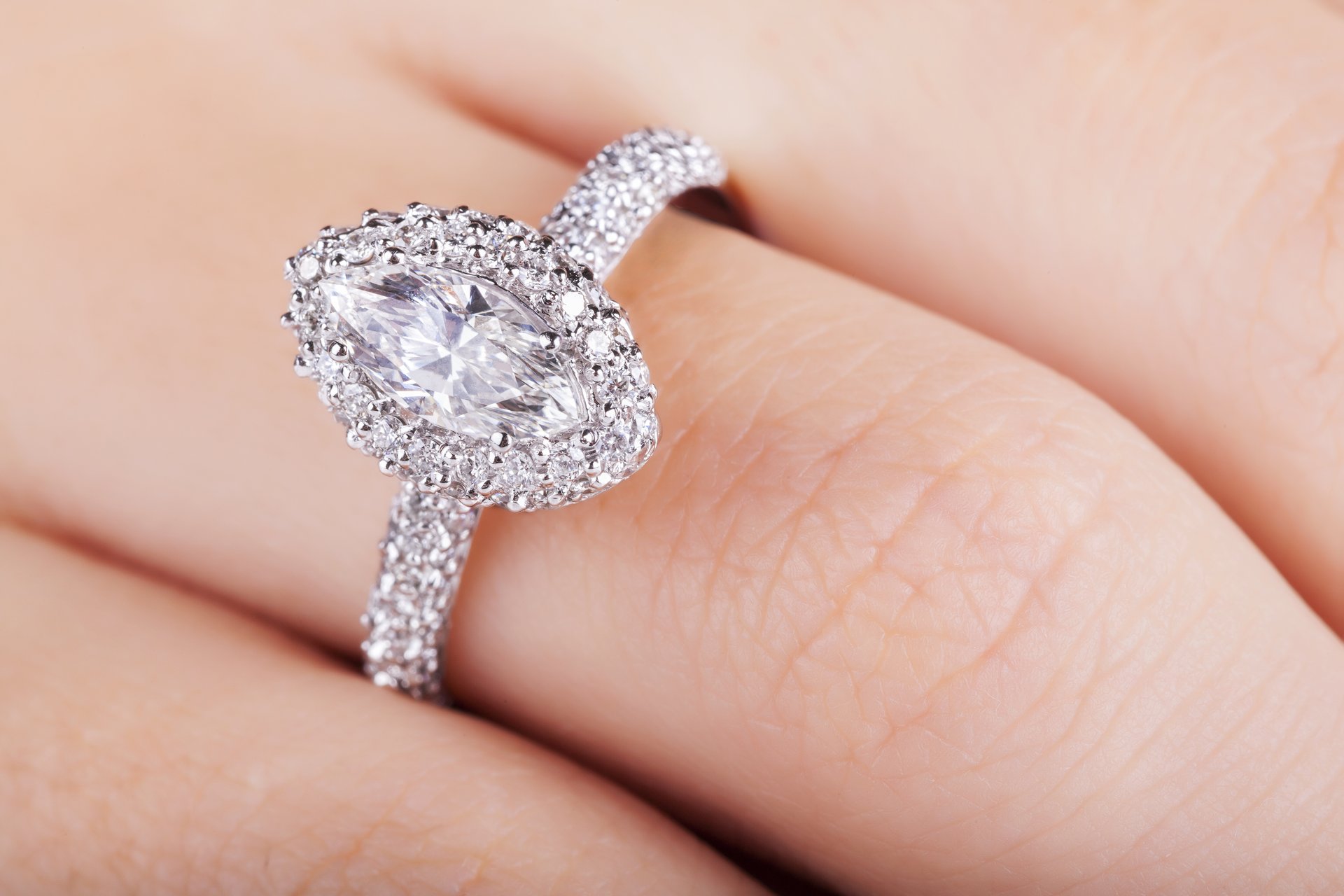

If you own a diamond, I’ve got news you won’t like: It’s probably worth less today than it was a few years ago. In some cases, a lot less.
CNBC reports that diamond prices have sunk to record lows, squeezed by too much supply and a flood of cheaper lab-grown stones.
The damage is worst in exactly the stones most of us own. According to industry benchmark Rapaport, prices for round 1-carat diamonds in SI clarity — everyday engagement-ring quality — fell 24.1% in 2025 alone. Half-carat prices dropped 26%.
Meanwhile, the big rocks held up. Prices for 3-carat stones barely moved. So if you’re not a Rockefeller, the slump landed on you.
The cause is no mystery. Lab-grown diamonds are chemically identical to mined ones and cost far less. In The Knot’s latest Real Weddings Study, 61% of engagement rings bought in 2025 had a lab-grown center stone.
And the price gap is striking. Couples who chose natural diamonds paid about $7,000 on average, while lab-grown rings averaged $4,300 — for a bigger stone.
I spent a decade on Wall Street, and one lesson stuck: If you can’t look up an asset’s price in a second, you probably can’t sell it for what you think it’s worth. Diamonds were sold for generations as forever. The value never was.
Your ring still sparkles. But falling prices ripple into places you might not expect. Here are five.
1. You may be paying to insure value that’s gone
A standard homeowners policy doesn’t cover much jewelry. The Insurance Information Institute says theft coverage is generally capped around $1,500. That’s why many people add a rider, also called a floater, that lists the ring at its appraised value.
That rider isn’t free. Progressive, for one, says jewelry coverage typically costs 1% to 2% of the item’s value each year. And your premium is based on the appraisal on file, not today’s market.
Say your ring was appraised at $12,000 in 2021 and you’re paying 1.5% a year. That’s $180. If a fresh appraisal comes back at $8,000, the same coverage costs $120 — $60 a year saved for updating one piece of paper.
That’s not life-changing money. The bigger issue is what happens if you ever file a claim.
Pull out your policy and find how it values a loss. Some pay an agreed value: the amount you scheduled, period. Others pay what it costs to replace the ring, or let the insurer replace it for you.
If yours is the second kind, you could be paying premiums on $12,000 of coverage for a ring the insurer can replace for $8,000. If it’s agreed value, congratulations: Your coverage just got more valuable, and you may want to leave it alone.
Either way, call your agent. And if you’re rethinking your coverage anyway, you can compare homeowners insurance quotes here.
2. Selling it will be a rude awakening
Here’s something jewelers don’t advertise: The appraisal in your drawer isn’t what anyone will pay you. Insurance appraisals show retail replacement value — what a similar ring would cost new, markup included.
Sell to a jeweler or pawnshop and you’ll typically get a fraction of retail. We ran the ugly math in “6 Everyday Goods That Are Basically Burning Your Money.”
Falling prices shrink that fraction further. So if that ring is your backup plan for an emergency, plan on a lot less.
3. Your will may be handing out money that isn’t there
Plenty of parents try to even things out in a will: the house to one child, the diamond ring plus some cash to another. That split may have been fair when you wrote it. It may not be now.
If a ring listed at $15,000 on an old appraisal would fetch a small fraction of that today, the child who gets it could come up far short of the one who got cash.
The fix is simple. Get a current appraisal that shows fair market value — what it would actually sell for — not insurance replacement value. Then revisit the split.
While you’re at it, check for these estate plan oversights that could leave your heirs with nothing. And if your plan needs more than a tweak, here’s a place to get help with estate planning.
A quick nudge — when it comes to money, the best day to get smart was 20 years ago. The second-best is today. Sign up for the free Money Talks Newsletter and start now. Takes 10 seconds, costs nothing, and could change your retirement.
4. A divorce settlement could rest on a fantasy number
The same problem shows up when couples split up. Jewelry often gets traded against other assets: You keep the ring; I keep more of the retirement account.
If the ring is valued at what someone paid in 2021, or at its insurance appraisal, the spouse who takes it could be trading real dollars for paper value.
I’m not a divorce lawyer, and every state handles property division differently. But if you’re negotiating, ask your attorney whether the ring has been valued at today’s fair market price. That question could be worth thousands.
5. Don’t hang on waiting for a comeback
The diamond industry knows it has a problem, and it’s doing what it’s always done: squeezing supply.
In July, De Beers said it would pause production for two years at Venetia, South Africa’s largest diamond mine by value. According to Reuters, the mine produced about 10% of De Beers’ rough diamonds in 2025.
Cuts like that can help, at least a little. Rapaport reported that smaller stones firmed up this spring after production cuts shrank inventories.
But the lab-grown elephant is still in the room. As long as a chemically identical stone costs a fraction as much, there’s a ceiling on how high mined-diamond prices can climb.
If you’re keeping a ring because you love it, keep it. If you’re keeping it because you think prices will bounce back, that’s a bet, and not a great one.
The bottom line
A diamond was never an investment. It pays no interest and no dividends, and what you can get for it depends on finding a buyer who wants your particular stone.
That doesn’t make your ring worthless. It makes it jewelry, which is what it was all along. Just make sure your insurance, your will and your expectations know that, too.
Shopping for a new stone instead? Prices for identical diamonds vary wildly from seller to seller, which is why you need to shop diamond prices before you buy anything.
Read the full article here