


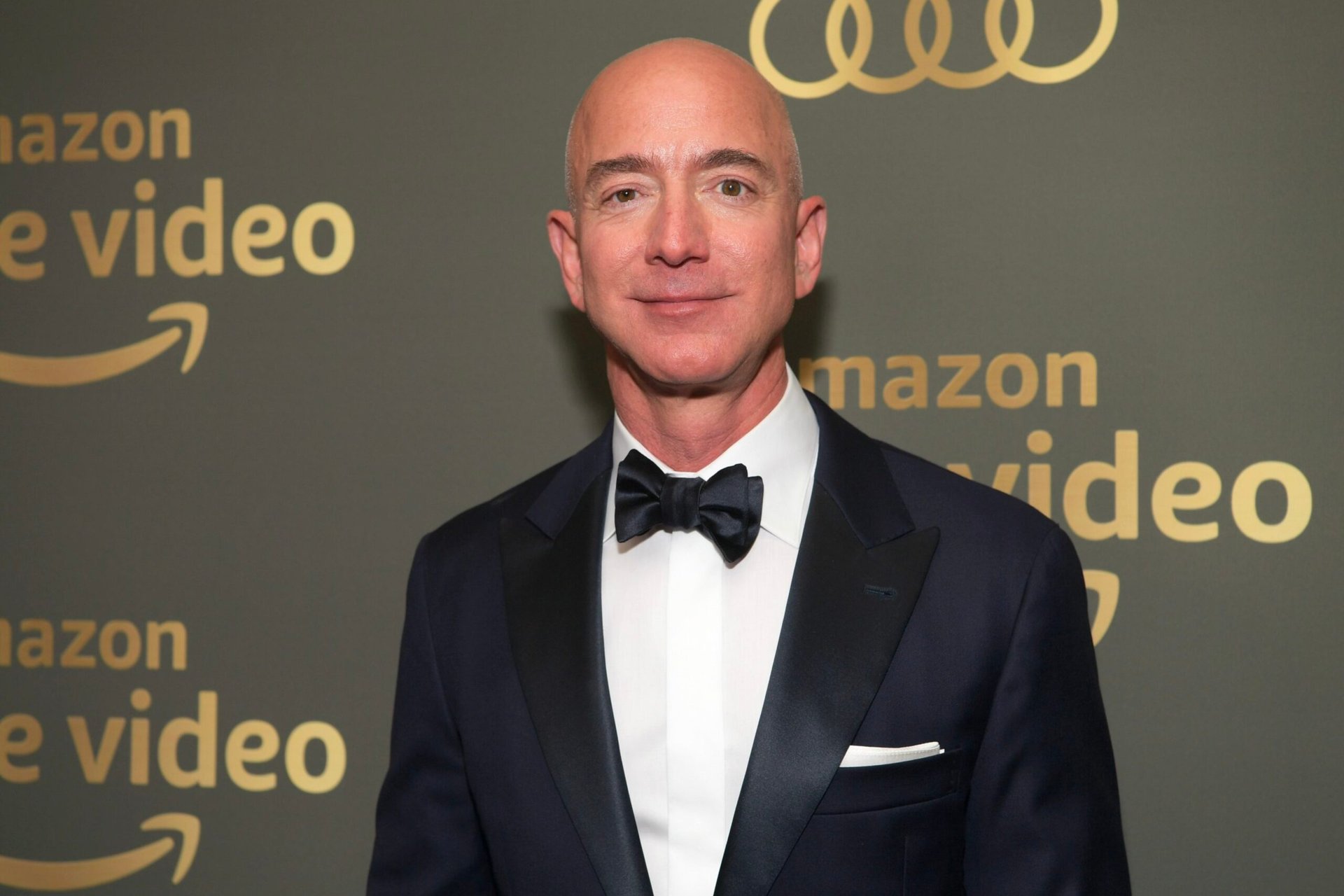

Amazon Executive Chairman Jeff Bezos recently sparked an economic conversation by arguing that the federal government should eliminate income taxes for the bottom half of American earners. Speaking during a televised interview on CNBC’s “Squawk Box,” the billionaire noted that the lowest-earning half of the population contributes roughly 3% of total federal income tax revenue.
Bezos stated that the money collected from working-class individuals is relatively insignificant for the federal budget but makes a difference in the household finances of ordinary families. Rather than pulling funds from tight household budgets, he suggested that eliminating this tax obligation would give lower-income workers a better shot at building their own businesses.
A look at who pays what
To understand how this proposal would affect personal finances, it helps to look at current tax data. According to an analysis by the Tax Foundation, households in the bottom 50% of taxpayers had an adjusted gross income of less than $53,801.
By contrast, the top 1% of earners brought in at least $675,602 annually. Under the current structure, the top 1% carries roughly 38% of the federal income tax burden.
For the average household in the lower half of earners, eliminating federal income taxes would mean keeping under $1,000 per year. Tax Foundation figures show that the average tax paid by this group is $913. It is also worth noting that many families within this bracket already owe zero federal income tax after accounting for refundable credits.
Bezos used the example of a healthcare worker earning $75,000 annually to illustrate his point. “We shouldn’t be asking this nurse in Queens to send money to Washington,” he said during the broadcast. “They should be sending her an apology.”
He argued that instead of demanding tax payments from middle-class workers who are facing high everyday expenses, the federal government should find ways to support their financial independence.
However, an income of $75,000 actually sits well above the bottom 50% threshold established by the data. For his vision to apply to that nurse, the government would need a broader tax-free threshold than just the lower half of earners.
The push for broader tax reform
This unexpected stance comes at a time when lawmakers are actively debating how to reform the tax code. Several proposals are already circulating in Washington that aim to reduce the burden on lower-income households.
For instance, Sen. Cory Booker, D-N.J., recently introduced a proposal called the Keep Your Pay Act. This plan seeks to make the first $75,000 of income tax-free for families filing joint returns, and the first $37,500 tax-free for single filers, by expanding the standard deduction.
Proponents argue that an immediate tax cut of this scale provides the direct relief needed to combat elevated living costs and help households build stability.
At the same time, the broader conversation around taxes remains highly polarized. While some focus on cutting taxes for the working class, others look to increase the burden on high earners.
Several states are exploring wealth taxes on multimillionaires and billionaires. Bezos has openly criticized these efforts, characterizing the push to raise taxes on the ultra-wealthy as a political strategy that focuses on picking a villain and pointing fingers rather than on creating sound economic policy.
Don’t count on no tax
While a total elimination of income taxes for the bottom half of earners remains a proposal rather than active legislation, the momentum behind middle-class tax relief is growing. However, plans like the Keep Your Pay Act face a steep uphill battle in a Republican-controlled Congress, where sweeping overhauls proposed by the opposition rarely clear committee hurdles.
Instead of banking on a zero-tax future, individuals should track how these competing philosophies impact local policies. While Washington debates long-term structural changes, individual states are driving immediate action through their own targeted credits and wealth tax proposals.
You can count on slashing expenses with AARP — just $15/year with auto-renewal. Join now and save hundreds on dining, travel, eyeglasses, prescriptions, and more.
Read the full article here