


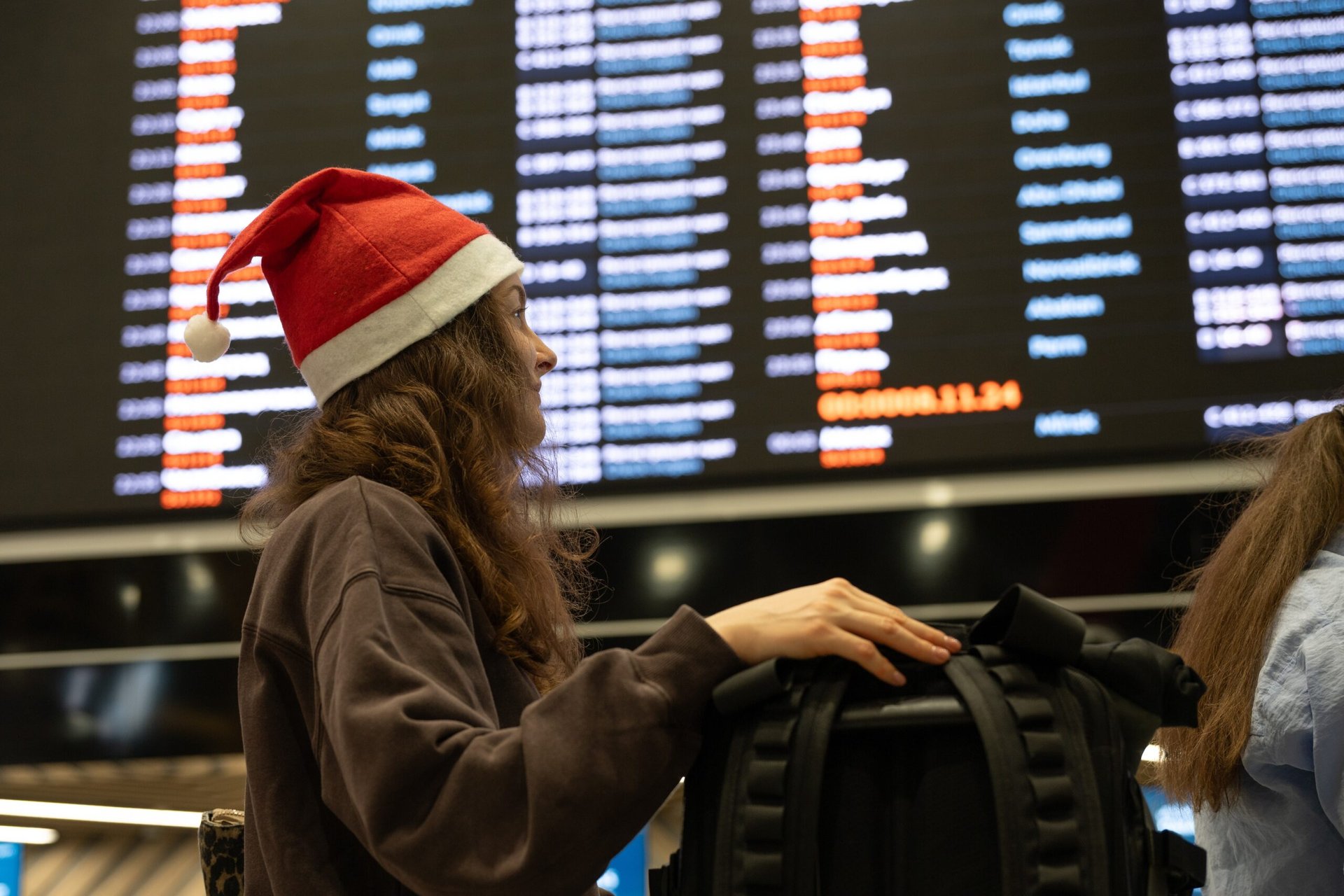

AAA expects millions of people to travel over the holidays this year, many of them by air. For flyers caught by a winter storm, much of the help they expect from the airline will not apply.
U.S. airlines often promise meals and hotel rooms for delays and cancellations within the airline’s control. Weather is not considered within the airline’s control.
Snow already falls outside those promises and, starting Feb. 1, 2027, a federal rule moves 10 more causes out of the airline-controlled category, including some medical emergencies, certain cyberattacks and airport closures from high winds, which could leave travelers covering more stranded nights on their own.
1. Know the one thing the airline must do
If an airline cancels your flight for any reason and you decline rebooking, you are entitled to a refund, according to the Department of Transportation. The same applies to a significant delay you choose not to fly through: three hours or more on a domestic flight, six on an international one.
A refund returns the ticket price. It does not pay for the hotel, meals or rental car you need while you wait, and the rules on which delays qualify for a refund carry their own fine print.
2. Check the card you used to book
Some credit cards include trip delay or trip cancellation coverage when you pay for travel with the card, at no extra cost. The details vary widely. Look up your card’s guide to benefits to see how long a delay must last before coverage starts, the cap per trip, and which family members are included.
If you booked with points or split the fare across cards, confirm the trip still qualifies.
3. Buy travel insurance before the storm has a name
Timing can decide whether a policy pays at all. “If you wait until a storm has already been named, your policy likely won’t cover claims related to it,” according to the National Association of Insurance Commissioners.
Coverage usually costs 5% to 10% of the total trip price, according to the NAIC, or roughly $250 to $500 on a $5,000 trip.
For a holiday trip with prepaid, nonrefundable costs, Faye Travel Insurance is one option to price while the forecast is still clear.
4. Read the cancellation fine print
Inurers set their own rules for when benefits start and how much they pay. Some pay a trip cancellation claim only if “you lose more than 50% of your scheduled trip length,” the NAIC notes, and may require a good-faith effort to continue the trip by other means.
Before buying, check the exclusions and whether a pre-existing medical condition could limit coverage.
5. Fill the Medicare gap if you are leaving the country
Holiday trips abroad and cruises carry a separate risk for people on Medicare. “Medicare usually doesn’t cover health care while you’re traveling outside the U.S.,” according to Medicare.gov.
Part B may cover medically necessary care on a cruise ship only when the ship is in a U.S. port or no more than six hours away from one. Some Medigap policies may cover emergency care abroad, so check yours before relying on it, and consider travel medical coverage if it falls short.
Save every receipt from a stranded night
Whatever coverage you end up using, a claim generally depends on paperwork: the airline’s notice of the delay or cancellation, receipts for meals and lodging, and proof of what you prepaid. Save them as they pile up, not after you get home.
A voucher offered at the gate is not the same as cash, either, and a travel voucher can be worth less than it looks. If you’d rather have your money back, first check which delays qualify for a refund.
Read the full article here