


Micro-investing apps are one of the latest trends in the investing world. And it makes sense why so many people use them.
With a savvy investing app, you can round up your purchases to the dollar, tucking away the extra change into an investing account. If you can start your day off with a latte and a contribution to your future, why not?
It feels good—you’re saving money without even thinking about it! But how much of an impact will that pocket change make in the long run? And is it safe to put your money in the hands of an easy-to-use smartphone app?
Let’s take a closer look at what micro-investing is, why it’s become a popular investing option, and whether or not it should be a part of your investing strategy.
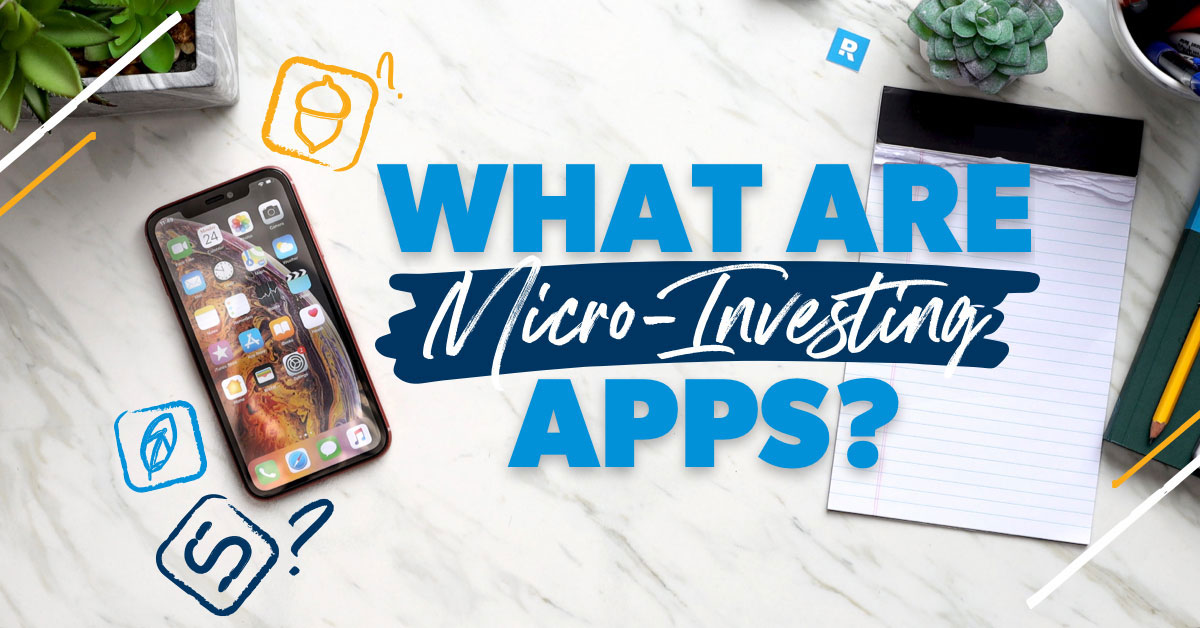
What Are Micro-Investing Apps?
Micro-investing apps allow users to save and invest money in small amounts. Usually, the app makes saving easy. When you connect a debit card, some micro-investing apps can even round up your purchases to the dollar or make automatic transfers and invest your money for you.
Micro-investing apps help you invest that extra cash in stocks. Most of them either charge fees on trades or offer free trades until your account reaches a certain amount, like $5,000. Some examples of investing apps are platforms like Acorns, Stash and Robinhood.
And these apps are pretty popular—especially with millennials. According to research done by Ramsey Solutions, 51% of millennial investors have tried out investing apps like Robinhood, compared to 32% of Generation X investors and only 5% of baby boomer investors.
Why Do People Like Micro-Investing?
Micro-investing makes investing a few dollars here and there pretty easy. It’s a set-it-and-forget-it approach—you don’t need a complicated strategy for saving. Instead, it uses the spare change you might throw on your counter after work. That’s definitely low effort.
You also don’t have to have a lot to get started. Depending on the app, you may have to pay a user fee, but it’s pretty small. For instance, Acorns charges a monthly fee of $3–5 depending on which account you choose.1 But after signing up, you can start by investing the change left over from your morning latte! It doesn’t get much easier than that—if easy is what you’re looking for.
Some Warnings About Micro-Investing Apps
If you’re wanting to throw your spare change into a savings account, there’s no issue with that. But some micro-investing apps let you make big decisions—and that’s where things can get messy.
Take Robinhood, for example. It’s an app that allows users to buy, sell, trade and invest in company stocks and cryptocurrency without paying commission fees. It’s considered a micro-investing app because it lets you invest in thousands of stocks for as little as $1.2
But you can invest a lot more. The average Robinhood customer has $5,000 in their account.3 And because the app allows anyone to sign up and start trading within minutes, people can start going trade-crazy without really understanding how the stock market works.
It’s also worth noting that the company is facing 50 active lawsuits right now, along with higher regulations for some pretty shady practices—like restricting trading.4
All that to say—be careful. Micro-investing apps make investing almost feel like a game. But remember, it’s your future you’re playing with.
Do We Recommend Micro-Investing?
If we’re talking about getting an investment app that will round up your Starbucks purchase by a nickel and pop it into a 401(k) for you, it’s not a bad plan. But if it’s your only plan, you should prepare to be hungry at retirement.
Micro-investing produces micro results. That’s why we don’t recommend it as a large part of your investing strategy.
Market chaos, inflation, your future—work with a pro to navigate this stuff.
On the other hand, if you’re thinking about click-of-a-button stock market investing—with bigger dollar signs attached—well, it depends where your money is going.
You shouldn’t invest in single stocks because they can be super risky. And right now, those are the only types of investing you can do on apps like Robinhood and Stash.5,6
Look—there are better low-effort, low-risk ways to beef up your investments than using a micro-investing app. For starters, you could invest enough to get the match in your company 401(k).
So, if you want a retirement strategy that produces great results, where should you start?
Step 1: Begin With a Firm Foundation
Instead of dabbling in micro-investing with your spare change, throw your extra money toward saving a $1,000 starter emergency fund, paying off your debt, and then building a bigger emergency fund to cover 3–6 months of expenses. Around here, we call these the first three Baby Steps.
You’re not ready to invest until you’ve taken care of Baby Steps 1–3. How can you expect to save toward your future when you’re still paying for things you bought months or years ago? Paying off debt frees up your biggest wealth-building tool: your income! Instead of hoarding your loose change, you can actually work toward saving 15% of your income toward your future.
And why is having a healthy emergency fund so important? Consider this: 45% of Americans have less than $1,000 saved for an emergency, according to Ramsey Solutions research. Surprise expenses, like a car repair or a broken water heater, happen to all of us. Having an emergency fund means that you can cover those emergencies without having to dip into your investments or go into debt.
Step 2: Stick With a Simple Investing Plan That Works
We recommend investing 15% of your income toward retirement savings. Here’s how to get started:
- Start with your workplace investing options. If you get a company match on your 401(k), take full advantage of it! Invest up to the match. That means if your company offers a 3% match on your contributions, invest at least 3%. That’s free money.
- If you have a Roth 401(k) option with good mutual fund options, you can keep increasing your retirement contributions until you reach your full 15% in your Roth 401(k). With a Roth 401(k), you can take advantage of your company match, if it’s available, as well as tax-free withdrawals after you retire.
- If you have a traditional 401(k), invest up to the match and then talk to your financial advisor about opening a Roth IRA. A Roth IRA is a great addition to your 401(k) because you have more mutual fund options and won’t owe taxes on the money you withdraw in retirement.
Step 3: Keep a Long-Term Perspective
Micro-investing may be a sprint for short-term savings, but you can’t count on it for long-term investments. And you’ll need your investments to do some heavy lifting if you want to actually live out your retirement dreams. The majority of American workers (67%) dream of traveling in retirement, followed by spending time with family and friends (57%) and pursuing hobbies (48%).7
If you want to bring your retirement dreams to life, you need a big, fat nest egg—not a micro nest egg.
The great news is that the earlier you get started, the more time you’ll have to put your money to work. That’s the power of compound growth! Here’s what that could look like for you:
Let’s say you’re 30 years old, making your median household income around $67,521.8 You decide to invest about $850 per month in your retirement accounts. That comes out to about 15% of your income every year. If you retire at age 67, with a 10% rate of return, you could have over $3.9 million in your retirement savings.
That sounds pretty great, right? But it gets even better. Of that total $3.9 million, your contributions only make up around $377,400. That means 90% of that total didn’t even come from your own pocket—it came from compound growth!
Step 4: Get Involved in Your Investment Plan
Micro-investing may sound fun, but if you want a confident retirement future, you need a more secure plan.
It’s normal to feel a little overwhelmed when it comes to planning and saving for your future. After all, you have big dreams and need big results! That’s why we always recommend partnering with a pro. It doesn’t matter if you’re new to investing or if you’ve been doing it on your own for years—it’s never too late to benefit from the guidance of an expert.
You want to find a trusted expert who takes the time to help you understand your options so you’re empowered to make confident investing decisions. A financial advisor or investment professional can help you make smart investing decisions over the long haul, whether the market is good or bad.
Wondering where to start? Our SmartVestor program connects you with financial advisors in your area who can help you learn about your investments and reach your financial goals.
Find an investment pro today!
Read the full article here