

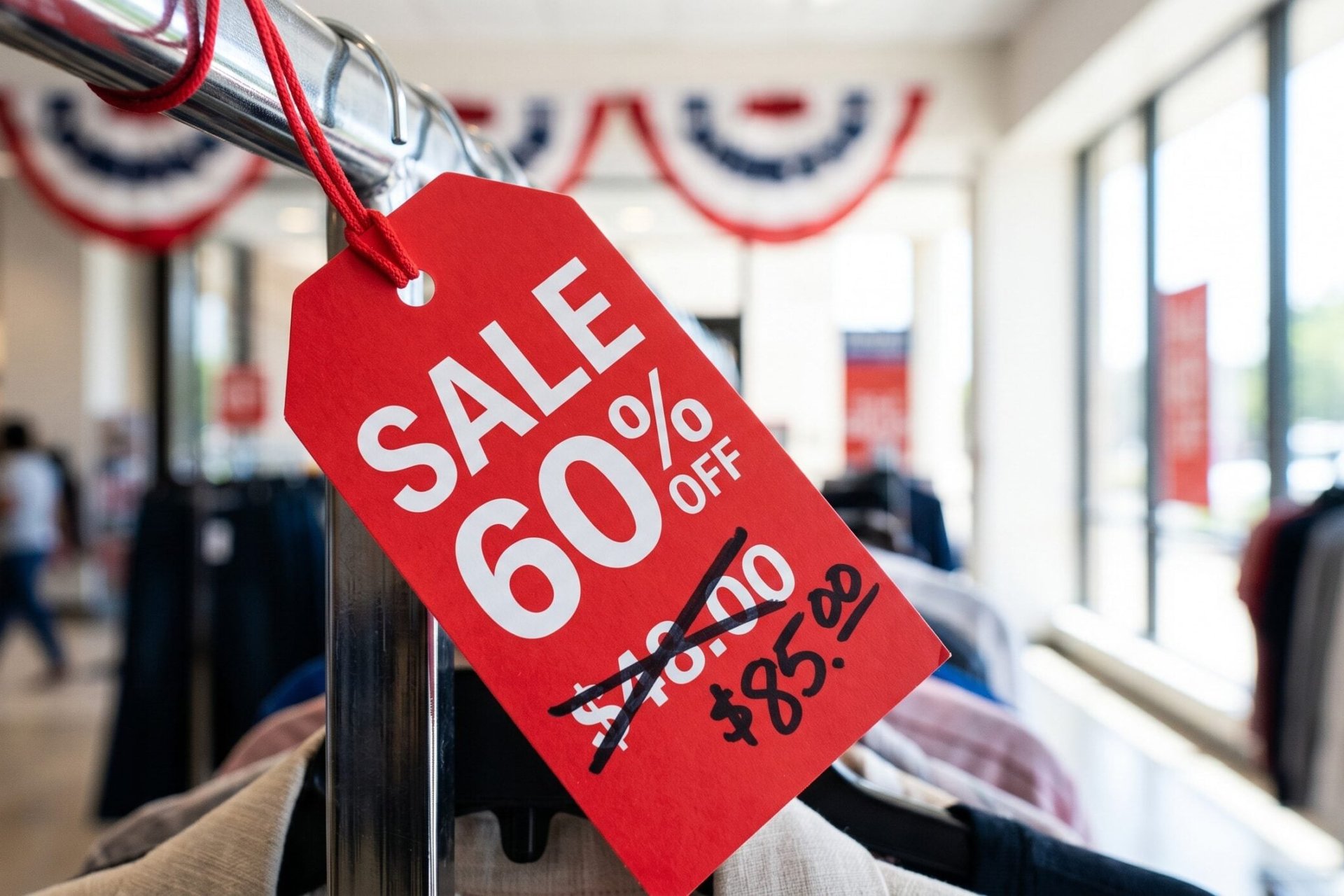

You know what’s coming this Memorial Day weekend. The “60% Off!” banners. The “Original: $299, Now: $129!” stickers. The countdown timers screaming that the deal ends Monday.
Most of it is a lie.
I’ve been doing this for more than 40 years, and I’ve watched retailers turn the fake sale into an art form.
The “regular price” you see crossed out? Often just a number invented to make the “discount” look impressive. The “limited time” pitch? Bogus — they’ll run the same “sale” next month.
And the data proves it. Consumers’ Checkbook, a nonprofit consumer watchdog, tracked prices at 25 major retailers for six months and found that at 21 of those 25 stores, items were marked on sale more than half the weeks they checked. At some retailers, the sale never ends.
Here’s how to shop smart this weekend and avoid getting played.
1. Treat every ‘regular price’ as fiction
The crossed-out “list” or “regular” price you see at most retailers isn’t what people actually pay. It’s a benchmark invented to make today’s price look like a steal.
Checkbook’s researchers found that at 12 of the 25 retailers studied, more than half the tracked items were “on sale” almost every single week of the six-month investigation.
If something is “on sale” 24 weeks in a row, that’s not a sale. That’s just the regular price wearing a Halloween costume.
2. Know the worst offenders before you hit ‘buy’
Checkbook flagged 10 retailers as the worst fake-sale offenders: Bass Pro Shops, Bed Bath & Beyond, Dick’s, Foot Locker, Gap, JCPenney, Michaels, Nordstrom, Old Navy, and Wayfair. At each, most tracked items were always or almost always on “sale.”
Kohl’s takes the prize for the most absurd defense. The retailer essentially defines its “regular” price as one it or a competitor may have charged at some point in the past — or might charge at some point in the future, according to Checkbook’s analysis.
A future price as the benchmark? They might as well roll dice.
When you see “50% off” at one of these stores, assume the real discount is closer to zero.
3. Stick to the few retailers that run honest sales
Only three of the 25 retailers Checkbook studied ran legitimate sales: Apple, Costco, and Dell. Walmart was a borderline case, with items on sale roughly 48% of the time.
That doesn’t guarantee the lowest prices. But when these companies say something is on sale, it actually is. That’s rare enough to matter.
Quick aside — most internet financial advice comes from people who weren’t alive during the last recession. I’ve been writing about money for more than 40 years. Want rock-solid advice? Sign up for the free Money Talks Newsletter. Takes 10 seconds. No fluff. No spam.
4. Check the price history before you spend a dime
The only way to know if a “deal” is real is to look at what the item actually sold for over the past few months. Three free tools make this simple:
- CamelCamelCamel: Tracks Amazon prices and shows historical highs and lows. Sign up for a free account and set alerts for when an item drops to your target.
- Honey: A free browser extension that surfaces price history and coupon codes at checkout.
- Google Shopping: Type the product name and compare prices across retailers. The differences are often shocking — Checkbook found some stores charge twice as much as competitors for the exact same item.
I’ve used CamelCamelCamel for years. It’s saved me from plenty of “deals” that were actually price hikes dressed up in red ink.
5. Ask for a price match — most stores will honor it
Many retailers will match a lower price from a competitor, including online sellers. Most don’t advertise this loudly, because they’d rather you not know.
Before you buy, do a quick search. If you find the same item cheaper elsewhere, ask the cashier or hit the store’s online chat. The worst answer is no, and a five-minute conversation can save you 20%.
Some retailers will also extend a sale price beyond the official end date if you just ask. Sales rarely “end” the way the banners claim.
6. Slow down — they need you more than you need them
The whole point of a “MEMORIAL DAY ONLY” countdown is to panic you into buying before you think. It works because retailers know fear of missing out beats common sense every time.
But here’s the truth: the sale will be back. Sometimes next weekend. Often cheaper.
According to a RetailMeNot survey reported by Chain Store Age, the average consumer plans to spend just $86 this Memorial Day weekend — down roughly 70% from $289 in 2025. Retailers know shoppers are squeezed. They’ll keep dangling “discounts” well past Monday.
If you actually need a mattress, a grill, or a patio set, go ahead and shop. Just take 10 minutes first to check the price history.
The bottom line
One more thing worth knowing. The Federal Trade Commission’s rules on former price comparisons technically prohibit fake sales. A “discount” isn’t legal if the original higher price was artificial or rarely charged.
But the FTC hasn’t seriously enforced those rules in decades. Which is exactly why retailers feel so comfortable lying to you this weekend.
So you’re on your own. The good news? A little skepticism and a 60-second price check are all you need to beat them at their own game.
Happy Memorial Day. Don’t let the banners fool you.
Read the full article here