


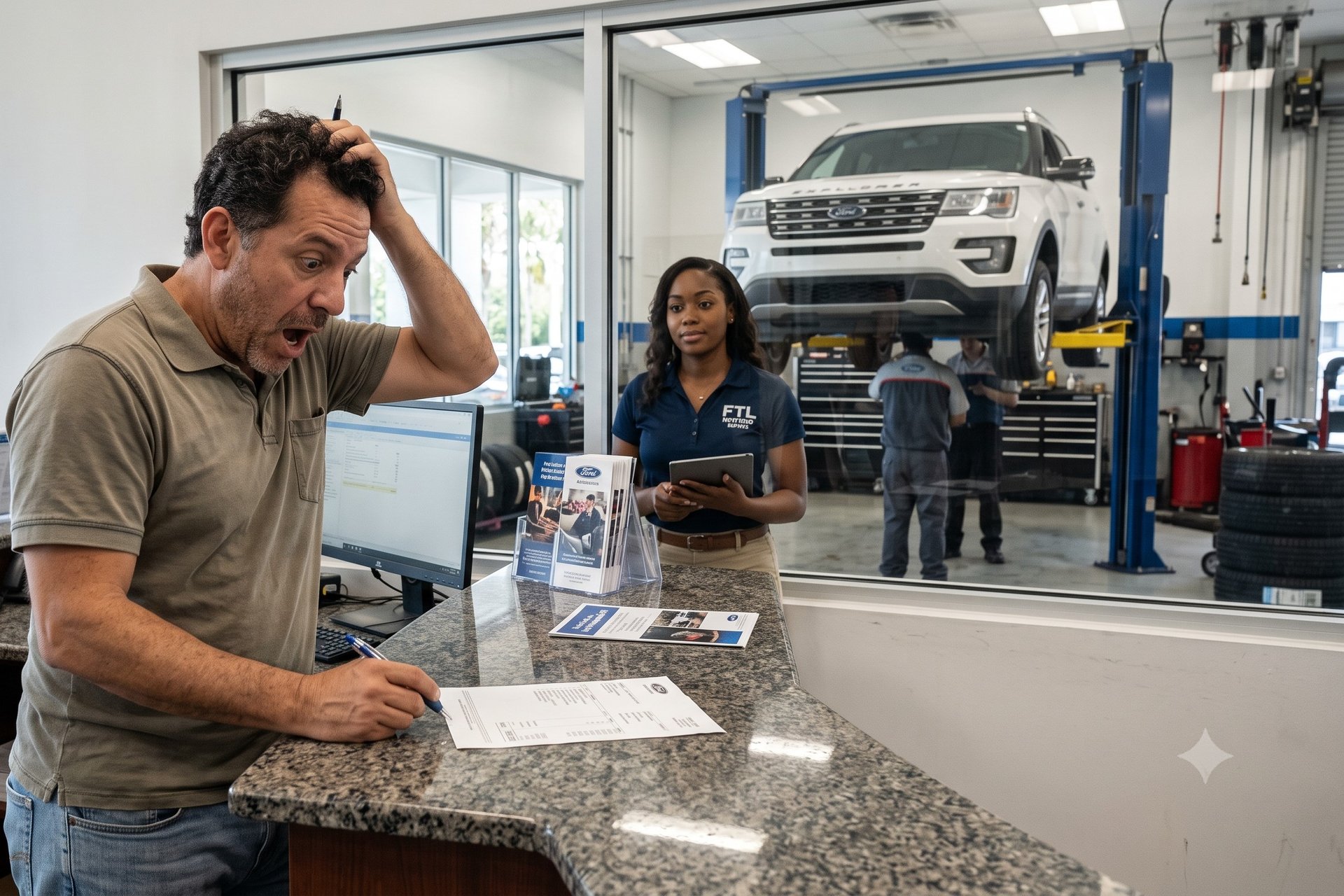

That little sticker in the corner of your windshield, the one telling you to come back in 3,000 miles? It usually isn’t a recommendation from the people who built your car. It’s a reminder from the people who want to sell you another oil change.
I’ve been writing about money for more than 35 years, and car maintenance is one of the places where old habits cost the most. Some of these myths were true once. Many stopped being true decades ago, but the shops that profit from them never got around to telling you.
Here are seven car-care beliefs that are draining your wallet — and what to do instead.
1. Changing your oil every 3,000 miles
This is the big one. According to Consumer Reports, the old “every 3,000 miles or three months” rule is outdated, thanks to better engines and better oil. Many automakers now say you can go 7,500 to 10,000 miles between changes, or six to 12 months.
Run the numbers the way Consumer Reports did. Say an oil change costs you $100 and you drive 30,000 miles over two years. At 3,000-mile intervals, that’s 10 oil changes and $1,000. At 7,500 miles, it’s four changes and $400.
That’s $600 back in your pocket, as long as you stick to the schedule your manufacturer set.
What to do instead: Open your owner’s manual and follow it. Many newer cars also have a built-in oil-life monitor that tells you when it’s time based on how you actually drive.
One caveat: Your manual may list a separate schedule for “severe” conditions, like lots of short trips, towing or extreme heat. If that describes your driving, follow the shorter interval. Just don’t assume it does because a service writer told you so.
2. Paying for synthetic oil your car doesn’t need
Synthetic oil is a fine product. It holds up better than conventional oil, and most recent models use it. But if yours doesn’t, you’re paying a big premium for nothing.
“Only use synthetic oil if your manufacturer calls for it,” says John Ibbotson, one of Consumer Reports’ resident mechanics. His reason: Synthetic can run you double to quadruple the price of conventional.
What to do instead: Check your manual for the oil type and grade. Use what it calls for — no more, no less. And if your car does take synthetic, don’t let anyone talk you into changing it early, and don’t stretch it past the manufacturer’s interval either.
3. Putting premium gas in a car built for regular
Many drivers buy premium because they think it’s better gas, a treat for the engine. It isn’t.
When AAA put this to the test in its lab back in 2016, it found no meaningful gain in horsepower, fuel economy or emissions from running premium in cars designed for regular.
As Greg Brannon, AAA’s director of automotive engineering, put it at the time, premium is “higher octane, not higher quality.”
That mistake isn’t cheap. On Oct. 14, AAA’s national average for regular was about $4.33 a gallon. Premium was about $5.25. That’s a gap of roughly 91 cents a gallon, or about $13.70 every time you fill a 15-gallon tank.
Drive 12,000 miles a year in a car that gets 25 mpg, and you’ll burn about 480 gallons. Pay the premium price on all of them and you’ve thrown away close to $440 a year.
What to do instead: Look in your owner’s manual. If it says regular is fine, buy regular. If it says premium is required, buy premium.
If it says premium is only “recommended,” that’s a judgment call. And for perspective, AAA’s 2016 study found that 70% of U.S. drivers owned a vehicle that requires only regular.
One quick note — I’ve won two Emmys for reporting on money, but what I’m proudest of is helping regular people build real wealth. Sign up for the free Money Talks Newsletter and I’ll help you do exactly that. 10 seconds, no fluff, no spam.
4. Letting the car idle to warm up
On a cold morning, it feels responsible to start the car and let it run for 10 minutes before you go anywhere. Today’s cars don’t need it.
According to the government’s fueleconomy.gov, most automakers say about 30 seconds of warm-up is enough before you pull away gently. The engine warms up faster when you’re moving, and idling gets you exactly zero miles per gallon.
It also burns real fuel. The site says an idling engine burns between 0.25 and 0.5 gallon an hour, more with a bigger engine or the AC on. At today’s prices, that’s roughly $1 to $2 an hour spent going nowhere.
What to do instead: Start the car, give it about 30 seconds, then drive gently for the first few minutes. Use those 30 seconds to clear your windows.
5. Buying a new air filter to boost your mileage
This is a classic upsell at the quick-lube counter: “Your air filter’s dirty. A new one will improve your gas mileage.”
On modern cars, it won’t. Fueleconomy.gov says that on fuel-injected, computer-controlled gas engines — like those built from the early 1980s on — swapping out a dirty filter doesn’t raise fuel economy. It can help acceleration, but that’s it.
What to do instead: Replace the air filter when your manual says to, or when it’s visibly filthy. It’s usually a cheap part, and on many cars you can swap it yourself in a few minutes. Just don’t buy it because someone promised you better mileage.
Want a fuel tip that does work? The same site says sticking with the oil grade your manual specifies can boost mileage 1% to 2%. Running a thicker oil than your engine was built for can cost you that much.
6. Thinking only the dealer can service your car under warranty
Plenty of new-car owners pay dealer prices for every oil change and tire rotation, afraid that going anywhere else will void their warranty. It won’t.
The Federal Trade Commission is blunt about this: Getting your routine service done somewhere other than the dealer won’t cost you your warranty. In fact, the FTC says a dealer that denies coverage for that reason is breaking the law.
The same goes for parts. According to the FTC, using aftermarket or recycled parts doesn’t void your warranty. The manufacturer or dealer has to prove that part caused the damage before it can deny coverage for that damage.
What to do instead: Shop around for routine maintenance, then keep every receipt. The FTC says the warranty company could ask for your maintenance records, so save the paperwork for oil changes, tire rotations, brake pads and inspections.
One exception: If a repair is being paid for under the warranty itself, the manufacturer can require you to take it to a shop it chooses.
For more ways the car business separates you from your money, see “7 Ways Car Dealerships Overcharge Retirees (and the Exact Words to Stop Them).”
7. Filling your tires to the number on the sidewall
There’s a number molded into the side of every tire, and plenty of people pump up their tires to match it. That’s the wrong number.
According to the National Highway Traffic Safety Administration, the correct pressure is the one your car’s manufacturer lists. The number on the tire is the maximum tire pressure, not what your car was designed to ride on.
What to do instead: Find the label on the driver’s side door edge or door post, or check your owner’s manual.
NHTSA says to check all four tires and the spare at least once a month, and to do it when the tires are cold, meaning the car has sat for three hours or more.
Getting it right pays off. Fueleconomy.gov says proper inflation raises gas mileage about 0.6% on average, and as much as 3%.
NHTSA also warns that too little air can lead to a flat, a blowout or tread separation, which is a far bigger problem than a few lost miles per gallon.
The bottom line
Notice the theme here? Almost every one of these myths makes someone else money. The quick-lube shop sells more oil changes. The station sells more premium. The service counter sells more filters. The dealer keeps your maintenance business.
The fix is the same every time: Read the owner’s manual, believe it over the windshield sticker, and keep your receipts.
Car repairs are already expensive enough. As we reported recently, car repair prices jumped 45% in five years. There’s no reason to pay for maintenance your car doesn’t need on top of that.
Read the full article here