

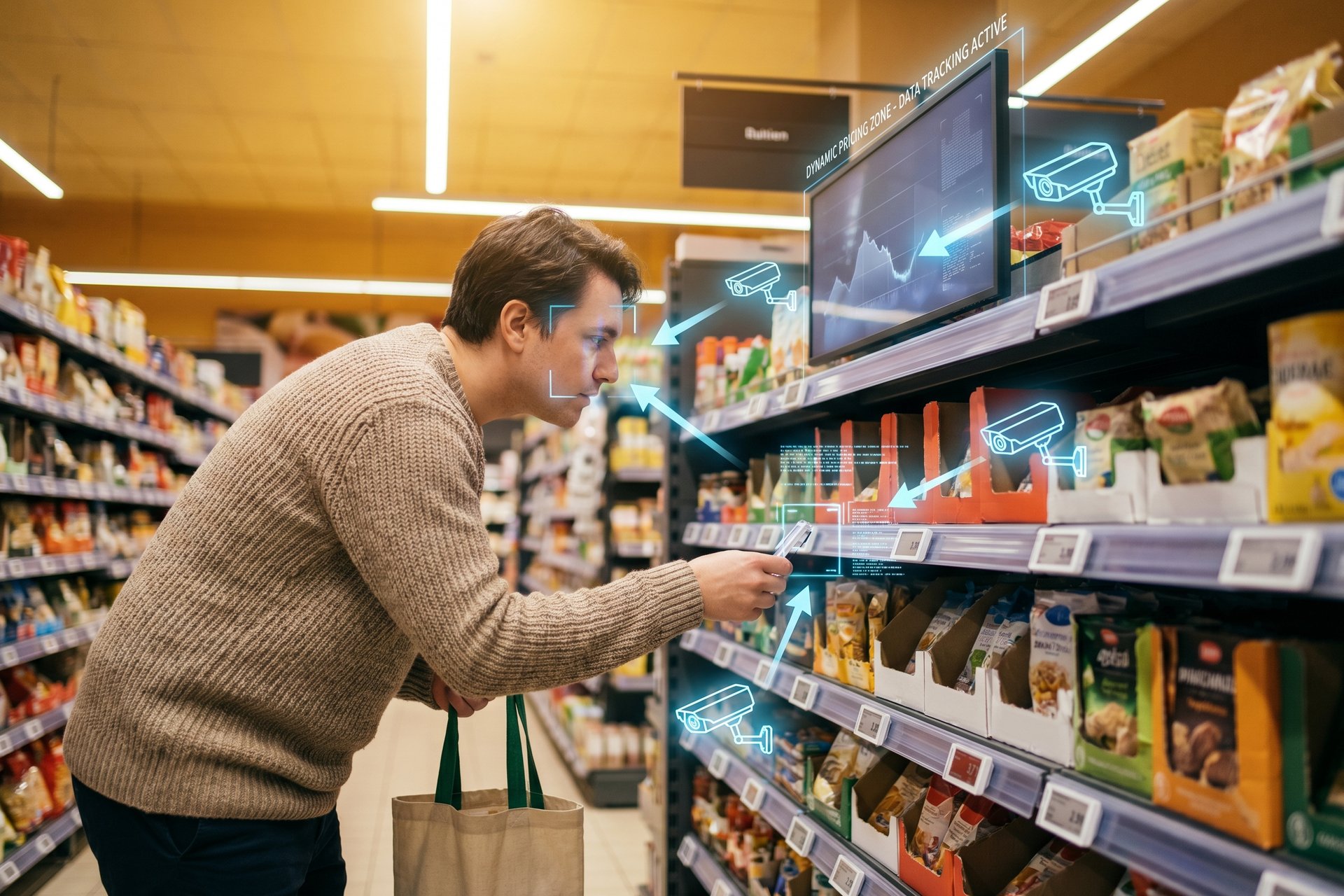

Is your store spying on you in order to change the price of what you might buy?
Surveillance pricing — or the practice of using shoppers’ personal data to alter prices — is a controversial topic.
Opponents say surveillance pricing is unfair, and shoppers don’t want to pay different and sometimes higher prices for the same item. Proponents say surveillance pricing is used to offer discounts to shoppers and does not raise costs.
A growing number of states are starting to weigh in on the practice, with at least 40 bills in 24 states looking to limit or ban surveillance pricing. In April, Maryland became the first state to prohibit it, though opponents such as Consumer Reports said the law did not go far enough in protecting consumers. Additionally, U.S. Rep. Frank Pallone (D-NJ), energy and commerce committee ranking member, launched an inquiry into surveillance pricing in May.
What Is Surveillance Pricing?
Surveillance pricing is using data to potentially alter a price based on the customer’s behavior, said Lindsay Owens, executive director of Groundwork Collaborative.
Sometimes that information is given to a company by the customer through a loyalty program membership and sometimes it is data collected by the company from the shopper’s browsing or purchases, she said.
“I like to think of surveillance pricing as the practice of spying on customers in order to potentially overcharge them,” Owens told USA TODAY. “It’s a practice that is becoming more common as shoppers spend more of their time shopping online, where it’s relatively easy for companies to track lots of behavior about you: what you put in your cart, what you click on, what you hover your mouse over or what you buy frequently if you’re signing into a loyalty program.”
In a recent survey of voters by Groundwork Collaborative, 76% of respondents said they supported bans on surveillance pricing.
Seventy-two percent of voters in the survey also said they believed discounts should be equal for all customers, even if that means smaller bargains, Owens said.
Eighty-three percent of voters in the survey said they supported companies using loyalty programs for personalized discounts, but that support dropped to 51% when voters learned that personal data was used to determine which customers get such deals.
Misconceptions of Surveillance Pricing
But supporters of surveillance pricing say the technology and practice have been misunderstood and unfairly lumped together as something bad.
“We can all agree that people shouldn’t be charged a different price for a gallon of milk than their neighbor based on who they are,” Drew Ambrogi, policy manager for Chamber of Progress, a tech industry policy coalition, told USA TODAY. But Ambrogi said the technology that many companies use to offer benefits to customers, such as discounts, is “what’s in the crosshairs” of the pending legislative bills across the country.
“There are a lot of ways that data-driven pricing both enhances competition and delivers real benefits for consumers,” Ambrogi said, such as grocery-loyalty program discounts or small businesses that will offer a 10% discount when you put an item in an online shopping cart to incentivize the completion of the sale.
Ambrogi said there is “very little evidence” that specific shoppers are seeing price increases because of surveillance pricing.
However, in early 2025, initial findings of a Federal Trade Commission surveillance pricing study found that a person’s precise location or browser history could frequently be used to target individual consumers with different and sometimes higher prices for the same goods and services.
Shoppers React to Surveillance Pricing
Users discussing surveillance pricing on Reddit have had some strong reactions.
“So here is our future, where we are going to be bled dry on an individual basis by corporations — all based on our naivete to allow all our personal digital information and habits to be bought and used against us daily,” one user wrote.
But another argued that the state bans on the practice are “throwing the baby out with the bath water…Legislate the bad behaviors, don’t ban the tool.”
How Is Dynamic Pricing Different Than Surveillance Pricing?
Dynamic pricing is often called surge pricing, or a price that increases based on supply and demand. The terms dynamic pricing and surveillance pricing have started to get “muddied up,” said Owens, with some people starting to use them interchangeably when they are different.
But Owens said both practices can lead to increased prices.
“Surveillance pricing is really at the intersection of two things that Americans really hate: being ripped off and being spied on,” Owens said.
Owens said with the affordability crisis that many Americans are facing, this “adds insult to injury; not just high prices, but unfair prices, unpredictable prices.”
Betty Lin-Fisher is a consumer reporter for USA TODAY.
Read the full article here